
Catfishing cancers
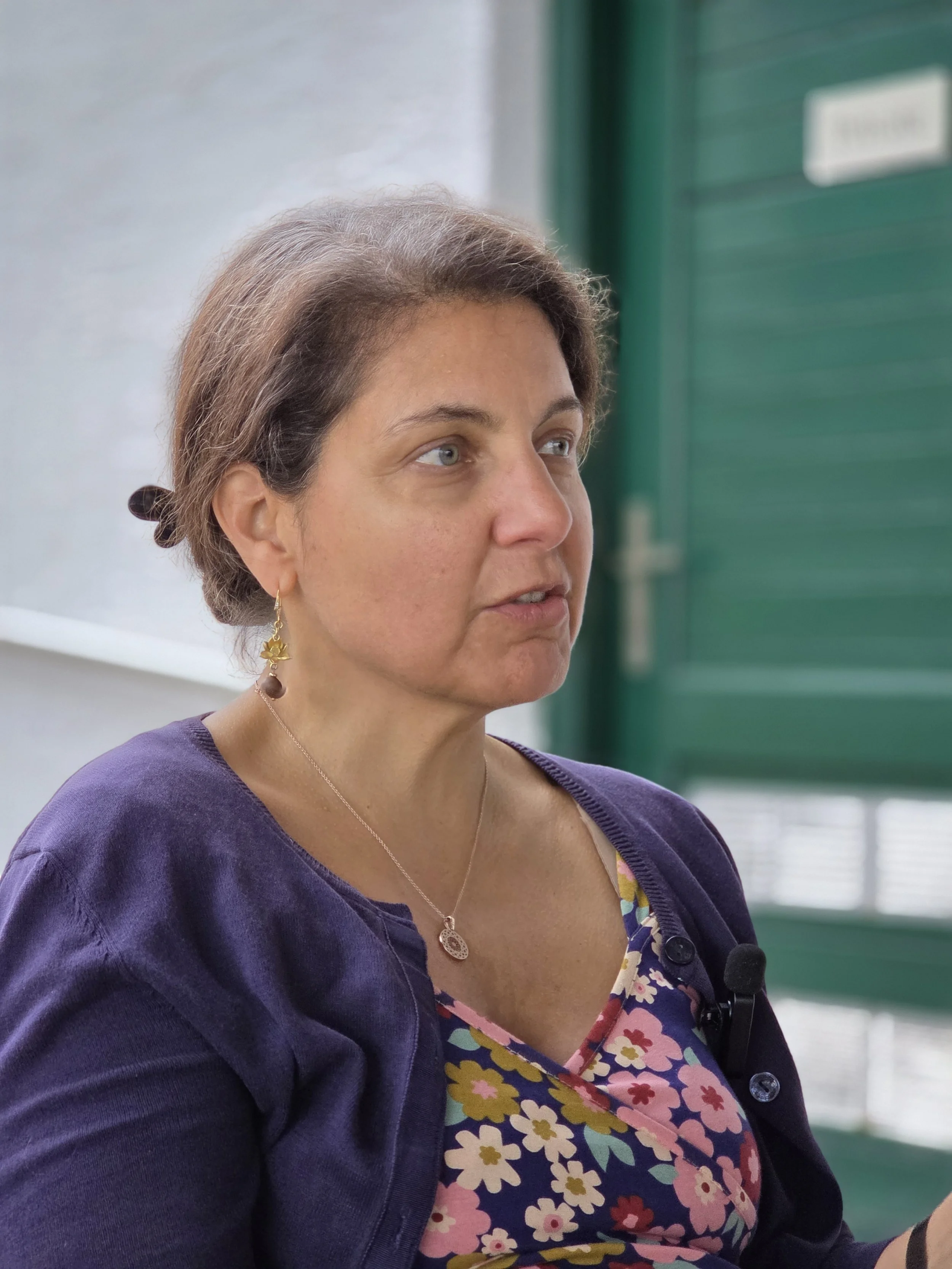
Dr. Julie Dragon is an Associate Professor at the University of Vermont, who really digs understanding our DNA code better to, in her words, “address many issues impacting our planet and lives, and making that data accessible to the many teams she collaborates with”. Find out more about her unconventional career path and the wild array of things she studies!
Find out more about Julie on her website: https://www.uvm.edu/larnermed/bios/profile/julie-dragon
And about the transmissible cancer in catfish in the press:
Nature podcast
Science article
NPR All Things Considered

Musical credit goes to Los Sóngoros who have allowed us to use the track Canta mi Mamá, written by: Nowa Crosby and Carlos Placeres. We thank them for sharing!
Find out more about them and their music at: songoros.com.
Listen:
Watch:
Subscribe to our YouTube channel now for all future recordings.
Episode transcript
[Background intro music playing is "Canta mi Mamá" by Los Sóngoros]
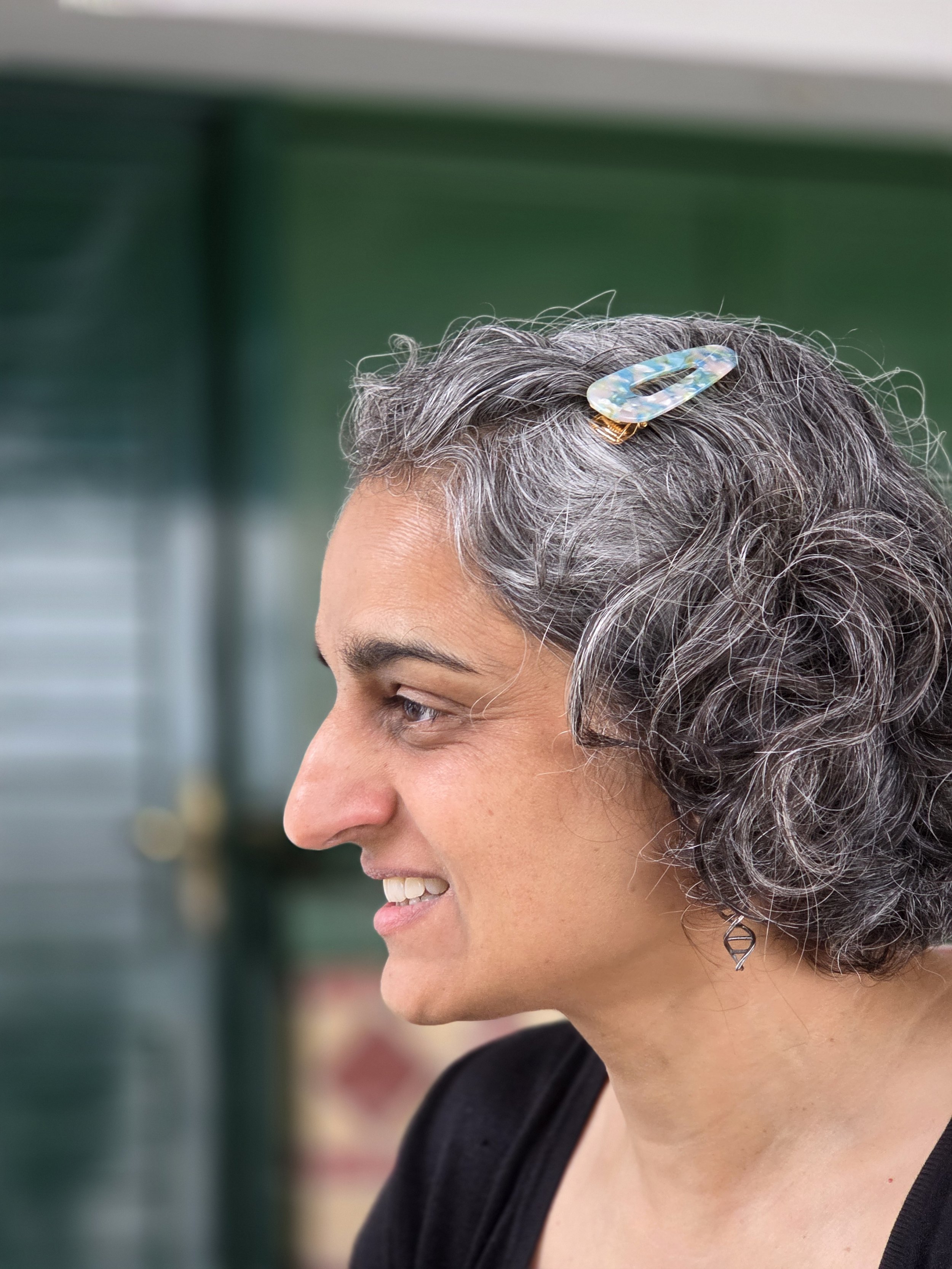
[00:01:00] Parmvir: Kalimera or kalispera, depending on when you're listening. And these Greek greetings come today courtesy of our destination recording on the beautiful island of Crete. This is your host, Parmvir Bahia, welcoming you to another episode of 2Scientists, a podcast where inspiring scientists share their work with you wherever you like to listen.
I'm surprised I got that all out in one go today.
[00:01:22] Julie: You did a good job.
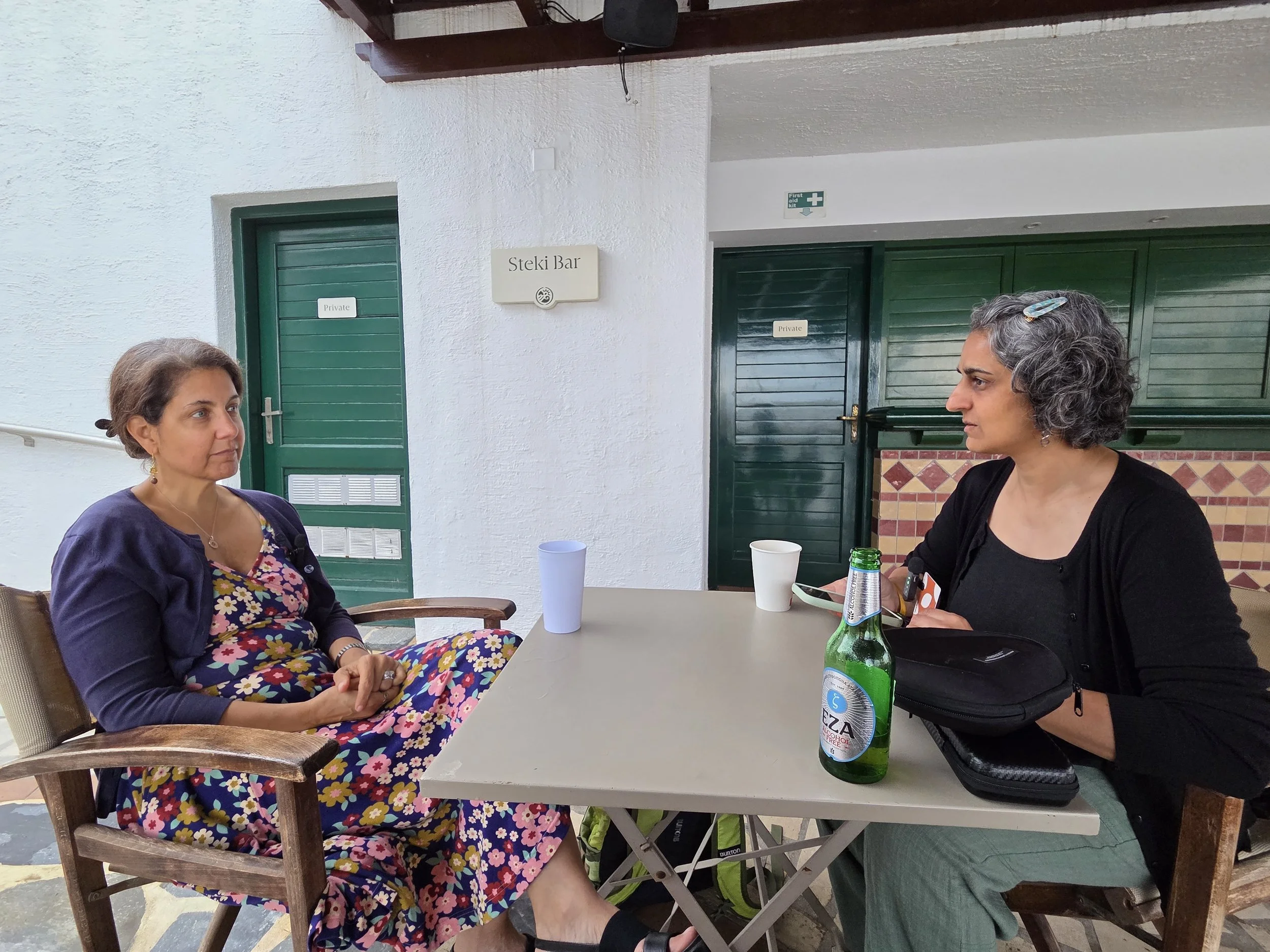
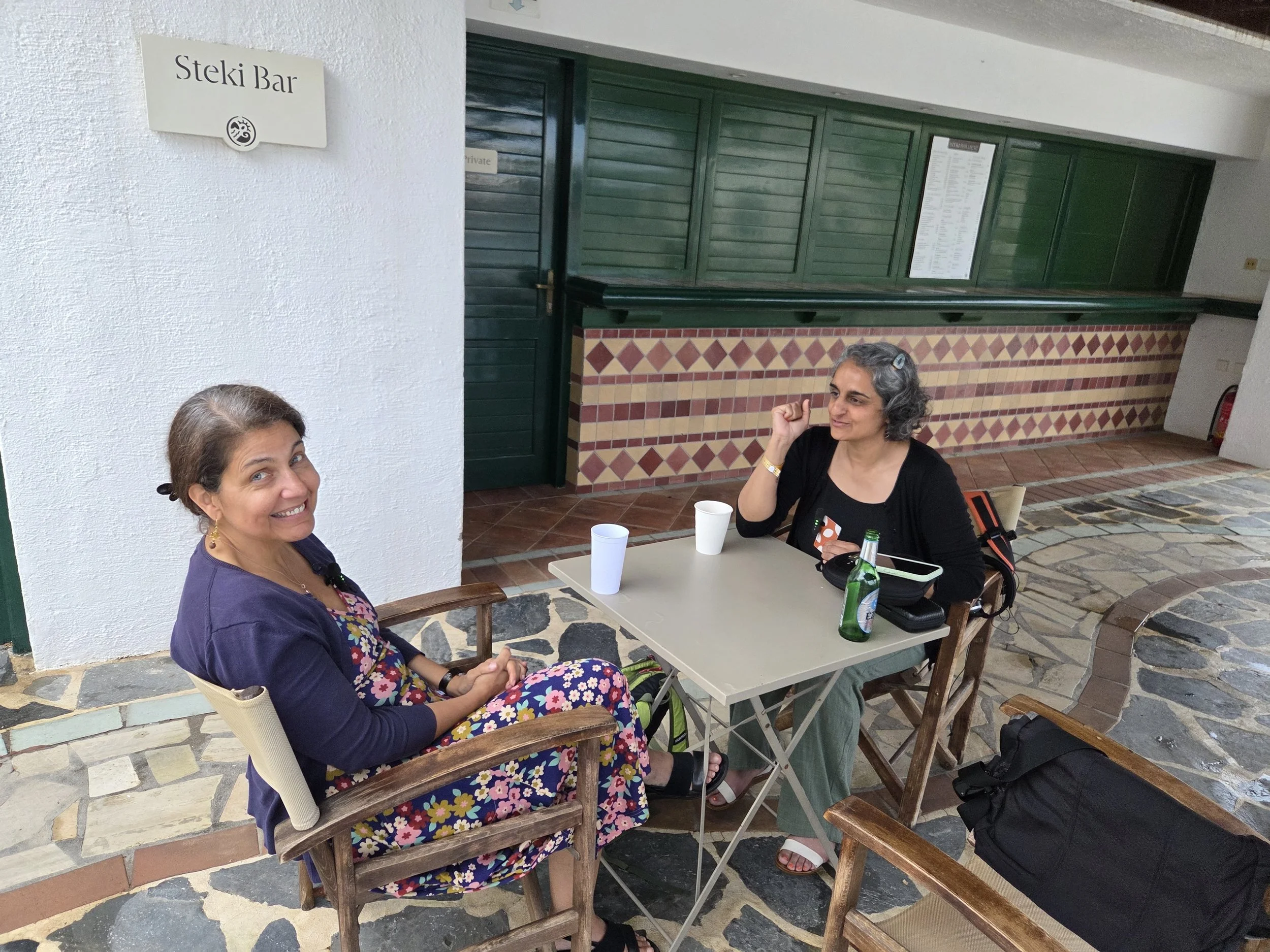
[00:01:23] Parmvir: Thank you. But why are we here in Crete? Well, honestly, I'm just a hanger-on enjoying the beach views and the all-inclusive everything at the gorgeous, Creta Maris Resort. But there are some scientists here for more serious reasons, and one such scientist is Dr. Julie Dragon. How are you, Julie?
[00:01:40] Julie: Good. Thank you.
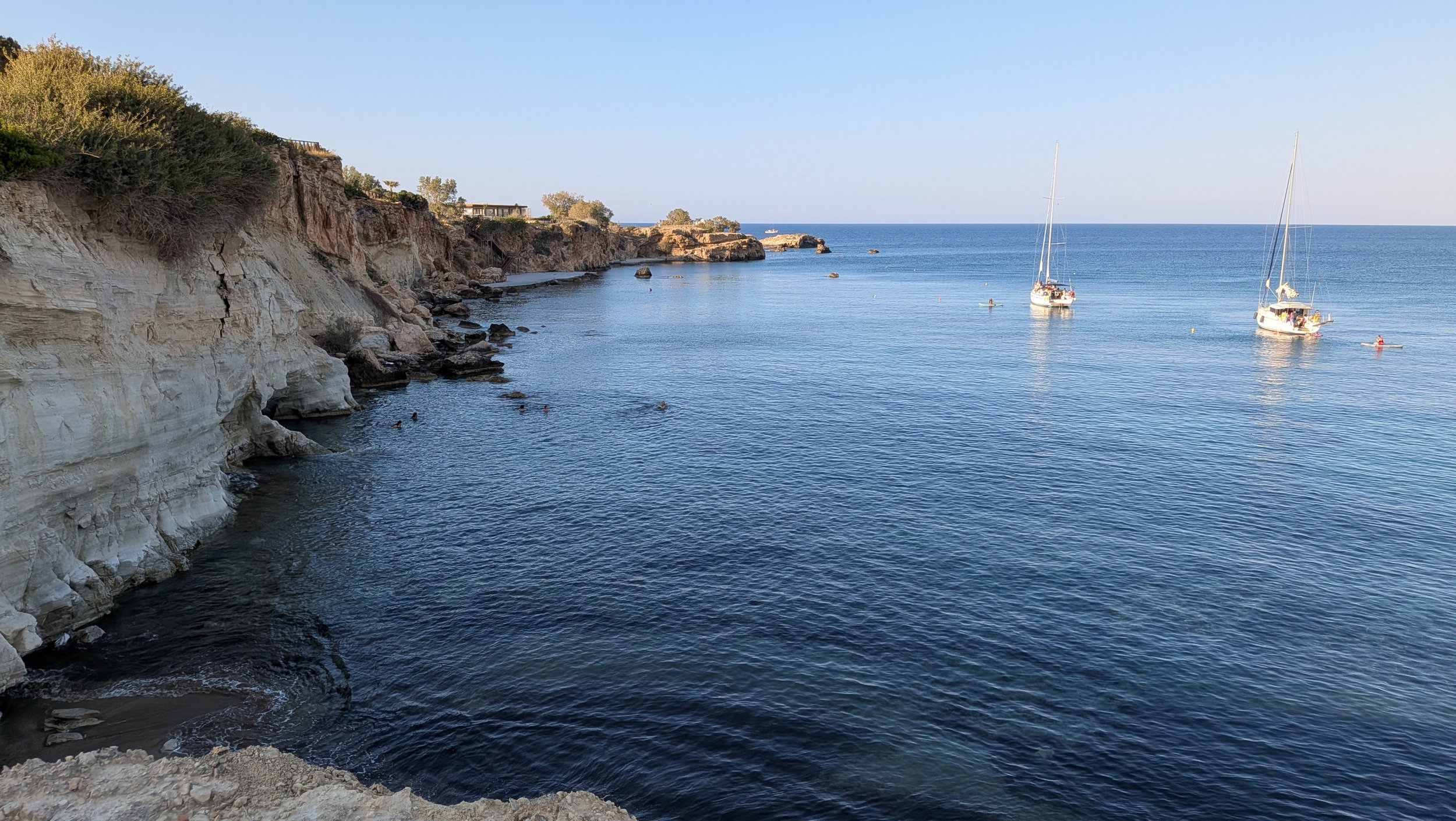
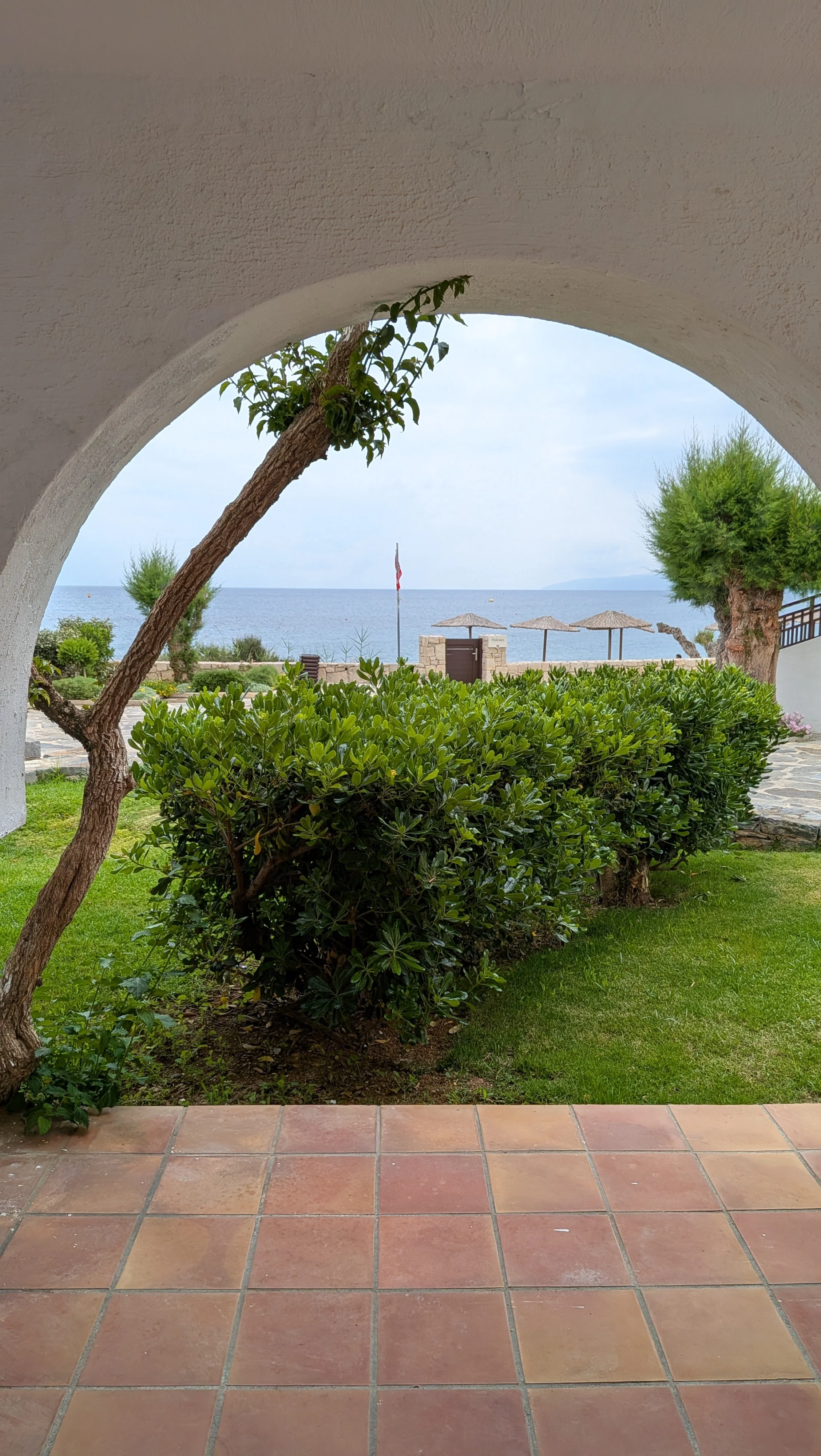
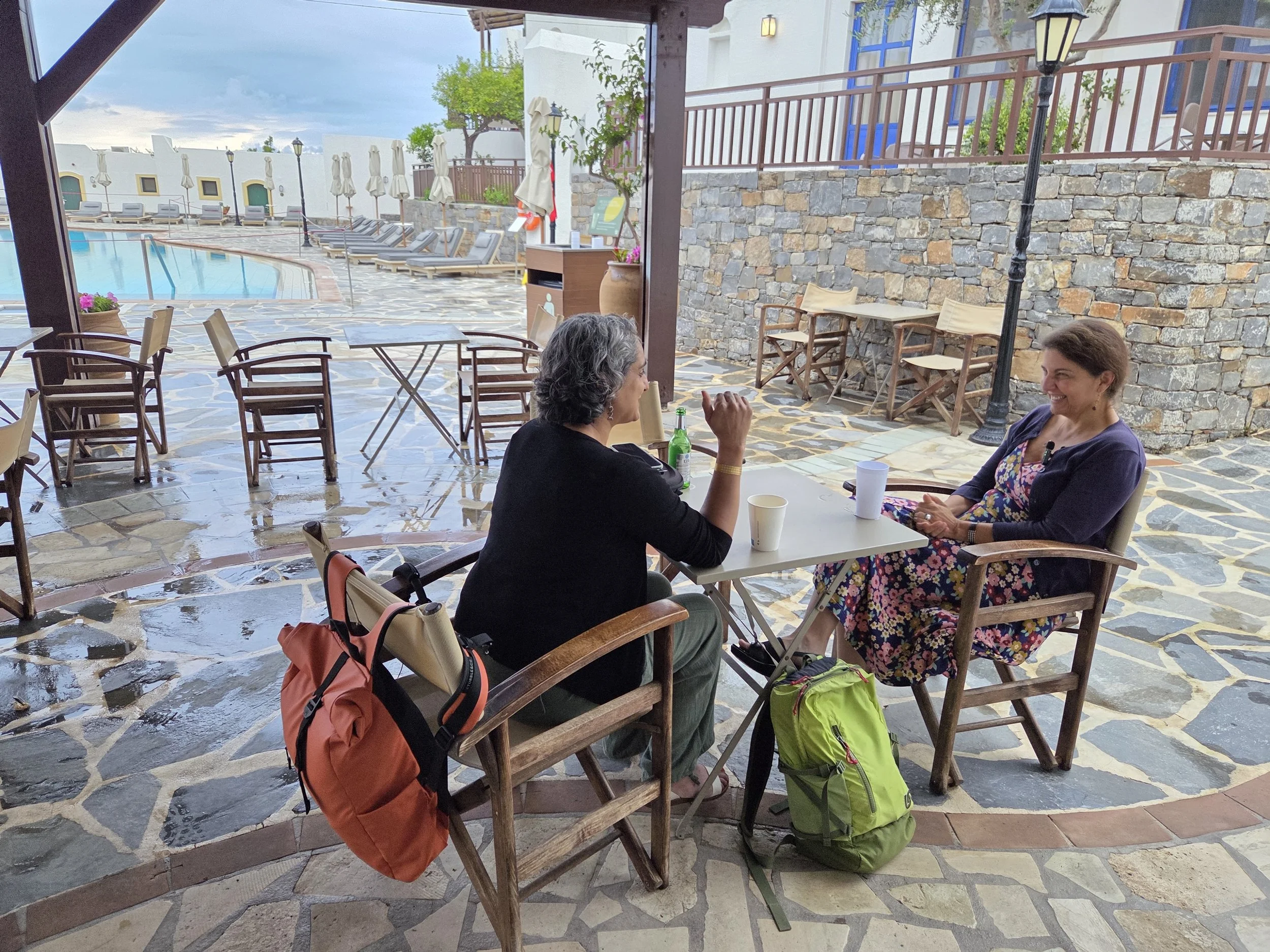
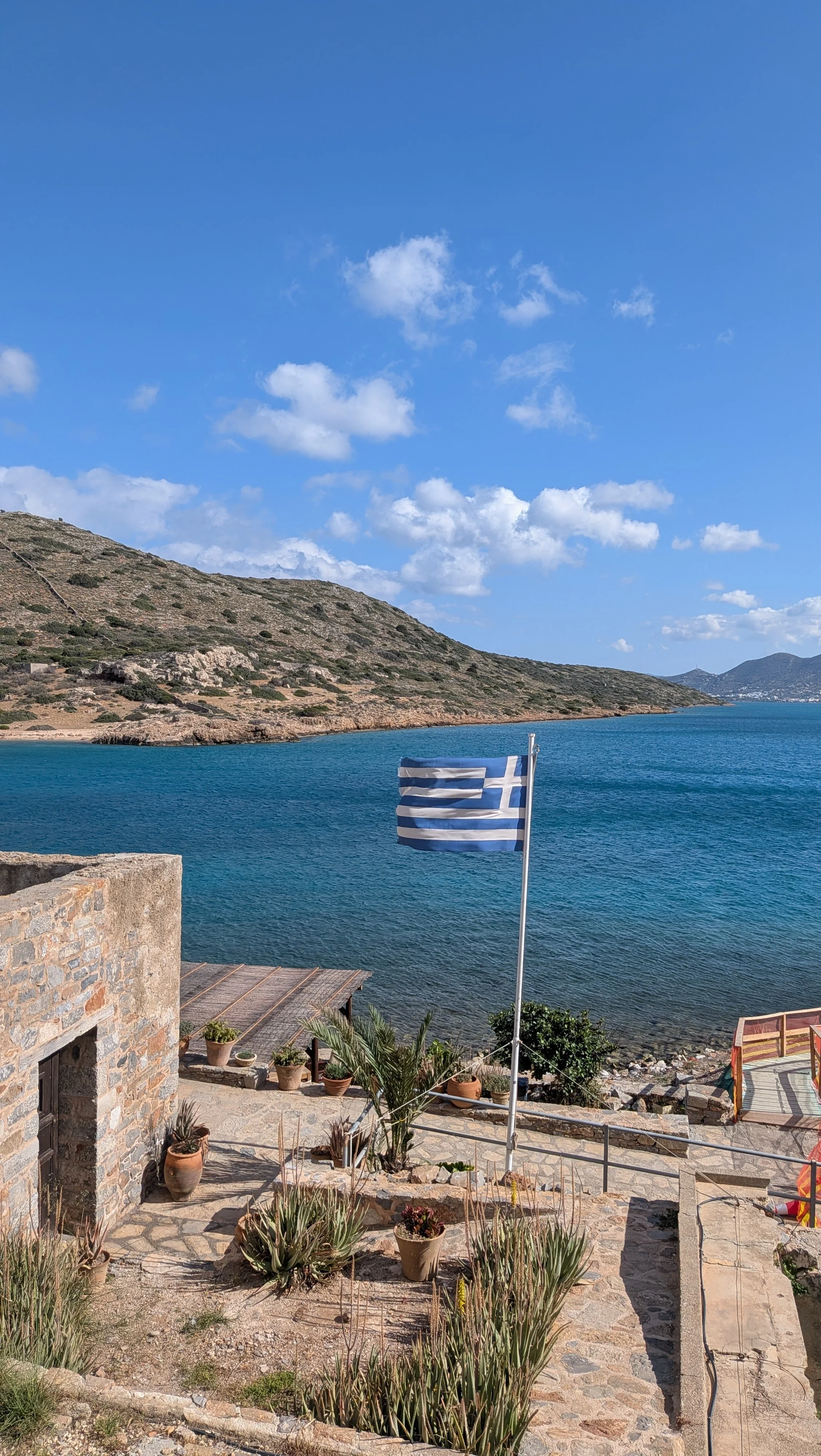
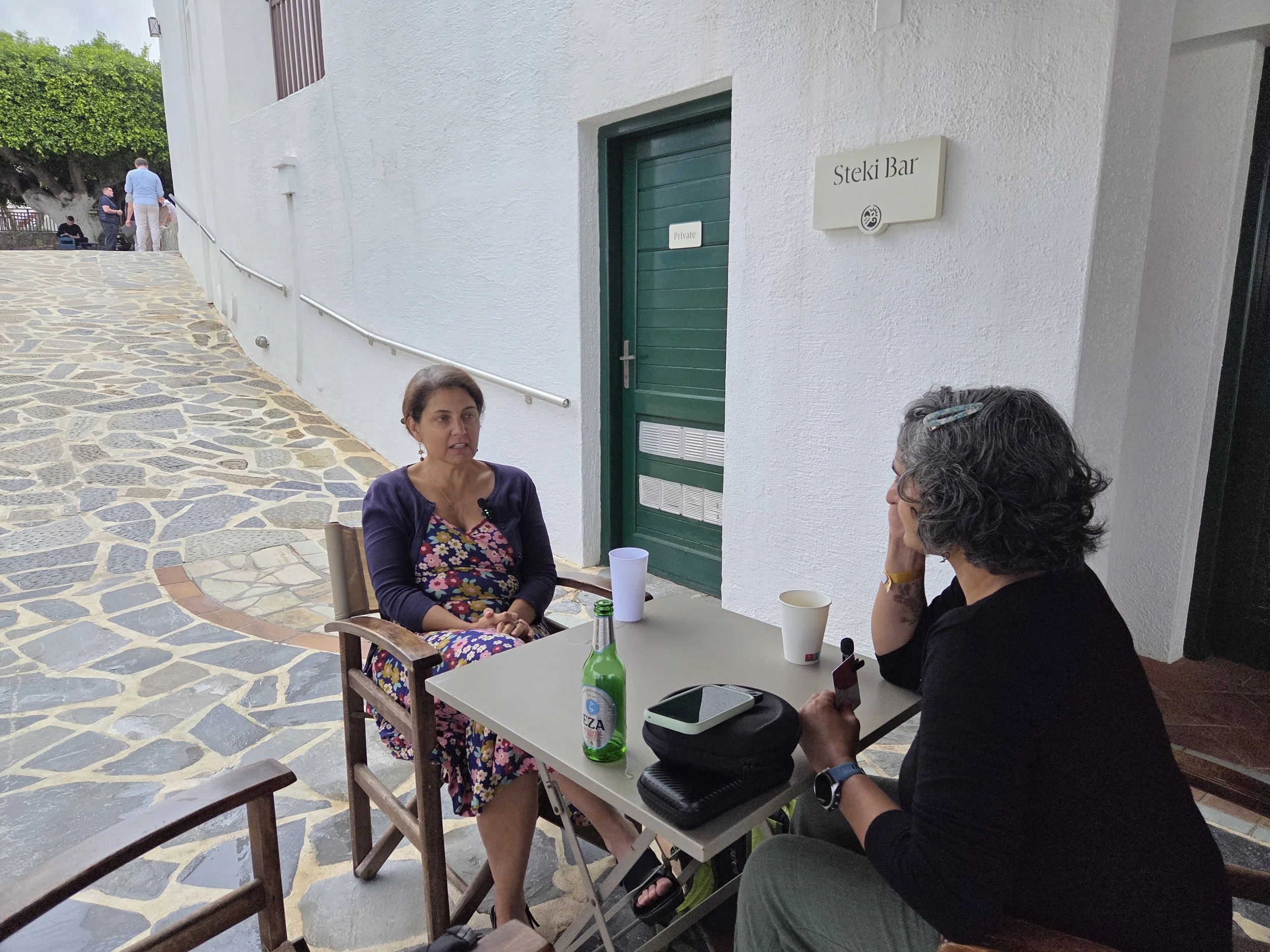
[00:01:42] Parmvir: We're so glad that you've taken time out of the meeting and, as I said, this lovely resort to speak to us today. And I think this has got to be far and away one of the nicest venues we've ever got to record a podcast.
[00:01:54] David: Yeah.
[00:01:54] Parmvir: which people will see if they go and visit our website.
Well, maybe. It's kind of gray today. So it doesn't have quite the cachet that it might be.
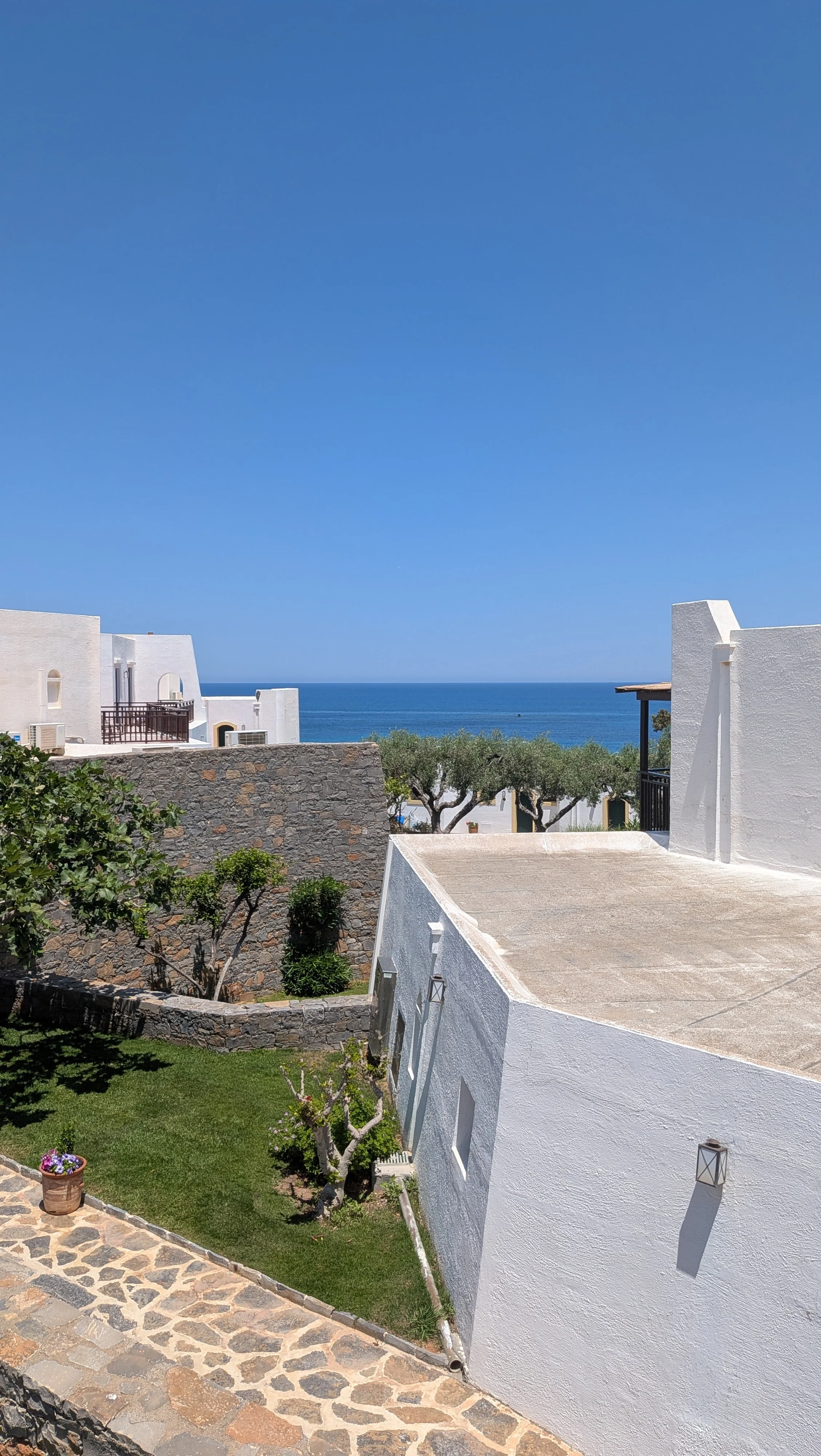
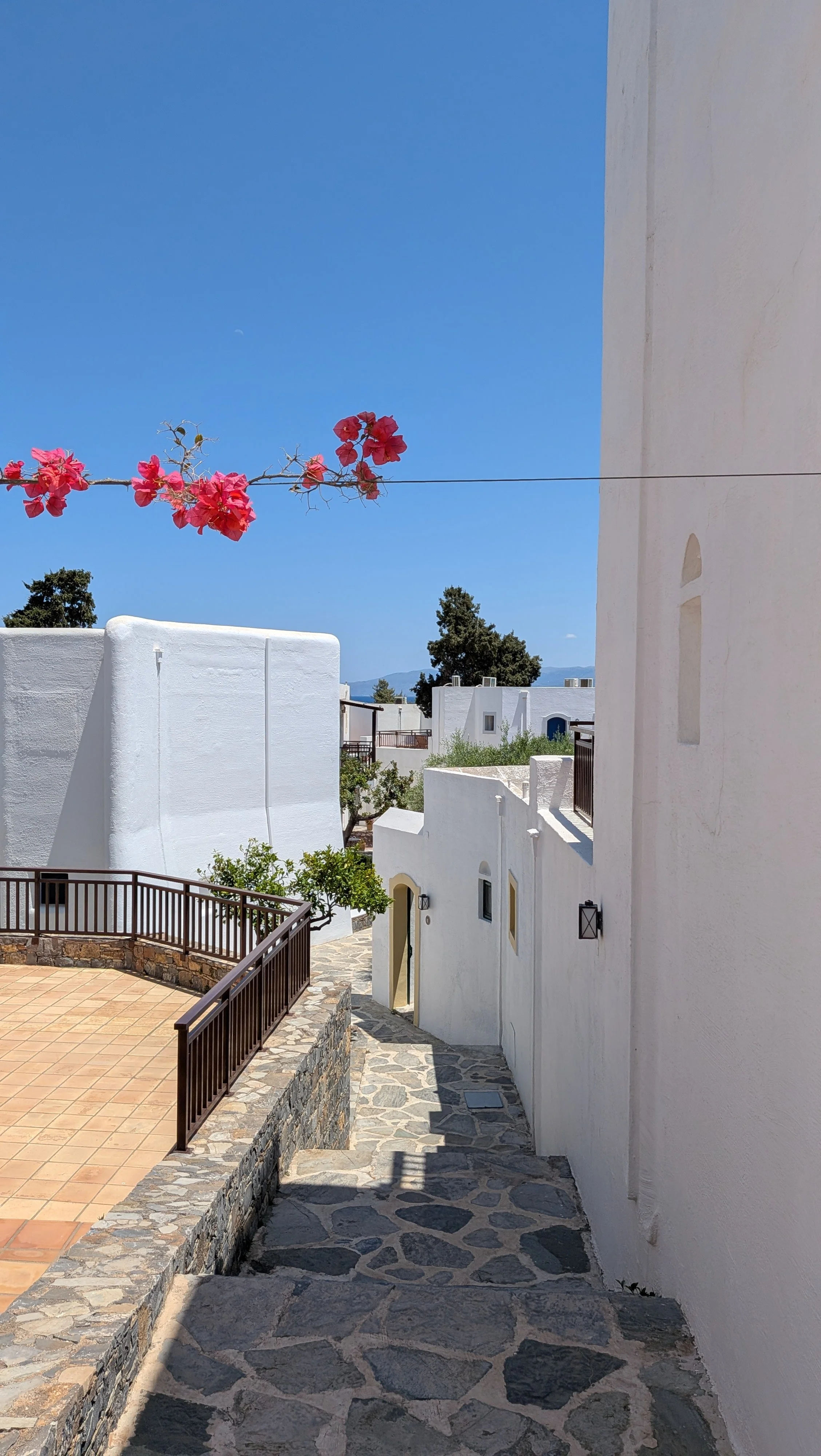
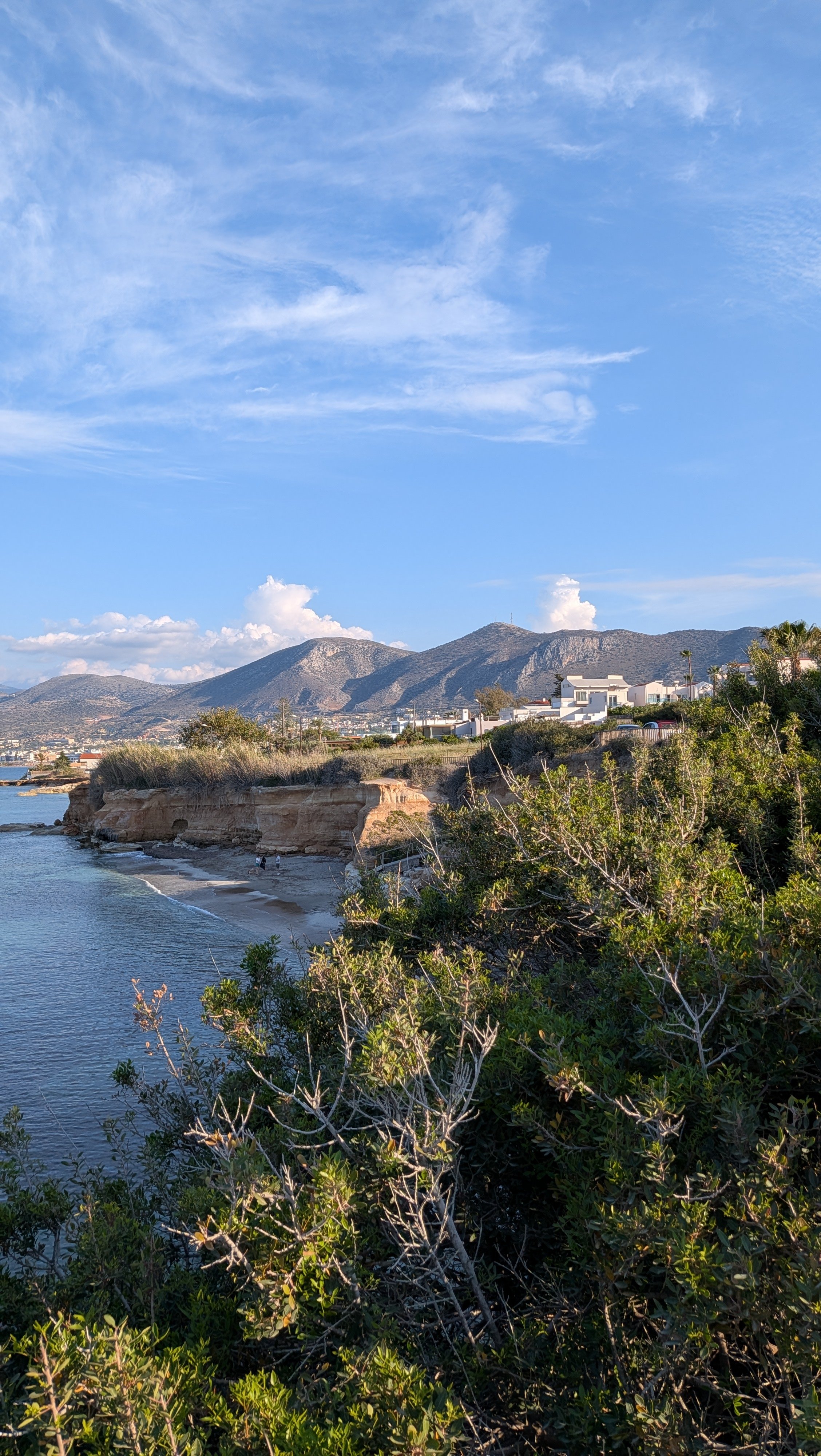
[00:02:02] David: We can put pictures of the area from, from the day.
[00:02:02] Parmvir: Yeah, we'll do that too.
[00:02:04] Parmvir: but as I mentioned, you, David, and a number of colleagues are here for the International Society for Evolution, Ecology and Cancer conference AKA ISEEC. So can you tell us a little about the idea behind this meeting and why you came?
[00:02:20] Julie: So this is my first time to this meeting, and I came at the recommendation of a colleague who has been here several times. And because we have this discovery of a transmissible cancer in catfish, she thought I should present it to this group.
[00:02:36] Parmvir: Yeah. Absolutely. So, have you enjoyed the conference so far?
[00:02:39] Julie: Very much.
[00:02:40] Parmvir: Awesome. So David and I have been joking about the White Lotus series just because of the setting that we're in- ... because the resort really has that kind of vibe. Now, I'm assuming this podcast is not going to be dramatic.
Or maybe it will. Who knows? But we're kind of using that plot device of opening with the end of the story, i.e. you being here at this meeting. So can we get you to go back to the beginning and tell us what it was that inspired you to go into science?
[00:03:08] Julie: It will be a long story, but if you want the honest truth, my parents took me to Disney World as a teenager, and we went to Epcot. And walking through these pretend villages from different countries inspired me to go into anthropology. I love cultures. I love learning about cultures. I was in archeology for a little bit 'cause I thought I was gonna be Indiana Jones. [Parmvir laughs] And then I liked linguistics, but then I started studying plants, and I was gonna be an ethnobotanist.
[00:03:41] Parmvir: Cool. What's an ethnobotanist? Explain that to people.
[00:03:45] Julie: Looks, looks for medicines in nature, in the plant world.
[00:03:49] Parmvir: Neat.
[00:03:49] Julie: So... Yeah. That was gonna be my path in life. And then, let's see, I joined the Peace Corps.
[00:03:57] Parmvir: Wow.
Okay.
[00:03:58] Julie: And spent two years in Mali, West Africa, in the desert, and came back deciding that I wanted to work in plant conservation.
So I worked for the Nature Conservancy for a few years-
[00:04:13] Parmvir: Mm-hmm
[00:04:13] Julie: ... and then decided to go back to graduate school and got a PhD in plant biology.
[00:04:18] Parmvir: I was joking having looked at your CV, so you started off as an undergraduate at UF, which is, you know, our neighbor to the north as people who live in Tampa. But yeah, I found it very interesting that you went from studying whole people to plant science, to ending up in a department which is for microbiology and molecular genetics.
So it felt like you were so offended by humans, you went onto less and less complicated organisms.
[00:04:48] Julie: I'm really not that offended by humans. Not always. No, that was a really practical choice. I was married when I got my PhD, I had three children.
[00:05:00] Parmvir: Mm-hmm.
[00:05:02] Julie: And my husband had a job and we were not moving, so I took a job in the bioinformatics core because that was what was available.
[00:05:09] Parmvir: All right. So now when it comes to your actual research, there is this field which I think a lot of biologists kind of understand in principle, but not in reality what it looks like. And to me, it sounds like a lot of data churning. So if we go to your website, the page describes your kind of top three lists of expertise as, data science, bioinformatics, and genomics. So to anyone outside of this field of work, first of all, data science might sound a bit redundant, right? Yeah. So people might say, "Well, you're a scientist, of course you work with data."
So what does that term actually mean?
[00:05:52] Julie: It means very little. It's a trendy term now to make a broader tent for data, including genomics and other correlated data that you might be interested in, or things like social media data that you can still analyze. But the bioinformatics piece and the data science piece are really about managing very, very large data sets.
So old school, you measure something, you measure it three or four times, you take an average, and then you compare two things.
[00:06:23] Parmvir: Yep.
[00:06:24] Julie: Now we are able to measure 50,000 things in one go 50,000 things.
[00:06:30] Parmvir: Yes.
[00:06:31] Julie: So you can't do that efficiently by hand. You need a data analysis pipeline. Yeah. And then there are other features of that data.
Usually it's not data that's all independent of one another.
[00:06:45] Parmvir: Mm-hmm.
[00:06:45] Julie: So the 50,000 measurements, um, have some other structure to them, so you have to make certain assumptions and treat the data in a slightly different way, and that's what a data scientist would do.
[00:06:57] Parmvir: Yeah. So we also use the term genomics, an awful lot in science without thinking very hard about the fact that it probably doesn't mean a lot to people outside of the field. So can you kind of define that term for us?
[00:07:11] Julie: Yeah. I mean, increasingly I find students come in knowing what genomics is, which is a good thing. I think it has made its way into the popular vernacular.
But instead of looking at individual genes, now we have the ability with these, you know, instruments that can create high volumes of data to look at your entire set of genes as a collective unit. So that's your genome.
[00:07:32] Parmvir: Yeah. And that's one of the incredible things that came out in the last couple of decades is the fact that we can map all of the genes that make us, us.
the first project, right, it took them 10 years to be able to do the whole of the human genome, and now we can do it in what? How long?
[00:07:51] Julie: Oh, I think an hour or two.
[00:07:53] Parmvir: Yeah. It's wild. It's incredible how technology advances.
[00:07:56] Julie: Yeah. There's been a race to see how fast you can actually turn around an entire genome.
[00:08:01] Parmvir: Yeah. And I guess then it also makes sense that this is why we need the kind of work that you do because that's just like a bonkers number of genes that we're trying to understand.
[00:08:13] Julie: Yes. You cannot do this on a laptop or even a desktop.
[00:08:16] Parmvir: No, quite. In fact, how big are the computers that you must use?
[00:08:20] Julie: We use a high performance computer cluster, so it has parallel processors so that you can process all the data at one time.
[00:08:29] Parmvir: Yeah.
[00:08:29] Julie: It doesn't take weeks and weeks.
[00:08:31] Parmvir: Yeah. So going back to bioinformatics, this is a question from David. He said, "Was your interest in bioinformatics a practical one?
As you can work with a computer and work anywhere, any time. It seems quite different from your other moves from anthropology to plant science, for example."
[00:08:51] Julie: This is true. I really love field work, and I didn't love the wet lab bench work as much. But, I was not anticipating that this is what would happen.
It's convenient now because I can work from wherever I wanna be. But no, at the time it was just practical. When I got my first job in the bioinformatics core, my job in the bioinformatics core, I didn't even think bioinformatics was a term.
[00:09:17] Parmvir: Oh.
[00:09:17] Julie: It was so new.
[00:09:18] Parmvir: Okay.
[00:09:19] David: I guess my question was more, bioinformatics requires a way of thinking and skills that needs to be learned as well. So how do you get into the bioinformatics core? It's not necessarily like the first thing someone with your degree would necessarily look for, right?
[00:09:34] Julie: Exactly. So as a plant biologist, I was doing a lot of, phylogenetics, which is using genes to recreate evolutionary trees.
[00:09:43] Parmvir: So they look kind of like family trees, right?
[00:09:45] Julie: Like family trees, and that's... it's a precursor bioinformatics skill. So as I said, bioinformatics really wasn't a term at the time, but I had some computer skills.
So I really learned everything on the job.
[00:09:58] Parmvir: So this kind of ties nicely into the fact that your title is as the director of this core facility. and I think that highlights a really important role within science which isn't often discussed, and that's this person who has, to coin a Liam Neeson phrase, "a unique set of skills," right?
So they probably imagine when you hear about scientists, you think of them working on a single project within a particular field of research. And one thing I've learned from people who work in core facilities is that they get super excited because they get to apply their technique to so many different projects, so many different fields.
So can you tell us what that work is like for you and the kind of projects that you've worked on that you've found exciting?
[00:10:41] Julie: One of the reasons I love my job is because I get to do so many different things. Yeah. And, we work a lot on microbiomes and metagenomics. So looking at all the microbes in a community, say in your guts or in soil that's contaminated with heavy metals, and looking at which microbes survive there and what are the kinds of products they're producing in that environment that help them live in that environment. I get to work on lots of cancer projects, which are of great interest to me. And look for viruses in bats, there's some of my other favorite projects. Well, of course, this fish project is one of my favorites.
[00:11:24] Parmvir: And so we come on to the
[00:11:28] Julie: fish project ...
[00:11:28] Parmvir: the fish project. So your talk at this meeting was on melanoma in a benthic catfish species. And so there are probably U.S. Representatives out there who would use this as an example of wasteful spending within science. Why are we studying cancer in fish? So Julie, tell us why should we care about fish cancers, and tell us about this project.
[00:11:53] Julie: Sure. There's many reasons we should care about cancers in non-human organisms and, I think the obvious should be that they can inform us about cancers in our own species.
In this situation here, catfish are used in many states as indicator species of pollution and other harmful changes in the environment. And so the fact that we are finding this melanoma in a catfish, I think should concern politicians about what else is going wrong in this environment.
[00:12:26] Parmvir: Yeah.
[00:12:26] Julie: If they're the canary in the coal mine, then we're showing it to them and they need to pay attention.
[00:12:31] Parmvir: I snuck into your talk today, I gate crashed, and I saw that, you know, a lot of the examples that you found of these populations are from social media posts where anglers, where fishermen have just kind of pulled them out and said, "Oh, there's this weird black thing on these fish.
What is going on here?"
[00:12:49] Julie: Exactly ...
[00:12:50] Parmvir: and that's kind of informing the work, right?
[00:12:51] Julie: Absolutely. We are crowdsourcing our effort to figure out the distribution of this disease now, and it appears to be more widespread than we thought. It's something that you don't see unless you look for, 'cause most anglers are not fishing for catfish.
[00:13:08] Parmvir: Oh.
[00:13:09] Julie: They're just happening to catch them.
[00:13:09] Parmvir: Okay.
So it's probably not the kind of fish that people eat. Am I right in thinking that? I don't know anything about fishing.
[00:13:16] Julie: Vermonters do-
[00:13:18] Parmvir: Okay
[00:13:18] Julie: ... as a cultural heritage thing, and that's, I think, why we noticed it. Our fish and wildlife noticed it first.
[00:13:24] Parmvir: Ah.
[00:13:25] Julie: And so... But no, a lot of places, they do not eat them.
[00:13:28] Parmvir: Okay. But in that case, like, you, you have a very kind of fundamental reason for caring about what is happening to the fish in the population, right?
[00:13:36] Julie: Sure. Sure.
[00:13:38] Parmvir: So, one of the other things I noticed from your talk is, and this is, strange for a cancer, is that this is a transmissible cancer.
So can you tell us what it is that you understand about that, and tell people what it means? Because in humans, we develop cancers individually. We don't pass them on to other people.
[00:13:59] Julie: Exactly. And they're very rare in nature, or at least we have thought that. so this is the fourth known animal to have a transmissible cancer, so it's a cancer that is contagious.
Animals pass it from one to another and this is known to occur in Tasmanian devils, in dogs, and in, 11 species of bivalves, so clams and mussels.
[00:14:24] Parmvir: Yeah. Actually, I think it's the story about cancer in Tasmanian devils, I think, that potentially made me realize that they're a real thing and not just something in a Warner Brothers cartoon.
Yes.
[00:14:35] Julie: It's the only one I knew about, so this was a big surprise to me as well.
[00:14:39] Parmvir: Yeah. That's wild. As you say, like, the longer we continue to work on things, the more we realize that they exist in nature, right?
[00:14:47] Julie: Exactly.
[00:14:47] Parmvir: So David asks, "How prevalent is this kind of cancer, and is it new?" Because you were looking at it before anybody else, or one could imagine that they had this for thousands of years.
[00:15:00] Julie: So we don't know currently how long they've had this, but we found some historical records from the 1850s where Henry David Thoreau described, inky black tumors on these fish.
[00:15:12] Parmvir: That's pretty cool.
[00:15:13] Julie: It's very cool.
[00:15:14] Parmvir: It feels a bit more like a detective story than a science one, right?
[00:15:18] Julie: Well, of course, it interested me as an anthropologist, and-
[00:15:22] Parmvir: Sure
[00:15:23] Julie: we have to keep exploring this.
[00:15:24] Parmvir: Yeah. That's very cool. I love research that comes about as the result of a story. So then, I mean, with regards to the kind of fish population, what kind of ramifications does it have on a more ecological level? Like, within an ecosystem, how would it affect that, do you know?
[00:15:45] Julie: We don't really know. And, and so the, the first lake where it was reported to us in Vermont, it does not appear to be wiping out the fish population. they're maintaining at a level of 30% disease. It seems to be fairly stable, but what we have heard from the fishermen, commercial fishermen in New Brunswick, is that it's increasing.
They would call it 50%, and they think that as the bullhead have increased, other fish have decreased.
[00:16:16] Parmvir: Yeah.
[00:16:17] Julie: They consider it almost an invasive catfish at this point.
[00:16:20] Parmvir: Oh, wow. Okay.
[00:16:21] Julie: It's not an official term, but- ... that's their, their opinion.
[00:16:24] Parmvir: Yeah.
[00:16:24] Julie: So it, appears there's different dynamics depending on where you are-
[00:16:28] Parmvir: Yeah
[00:16:29] Julie: to how this is, this is playing out in nature.
[00:16:31] Parmvir: Yeah. It seems quite dramatically different from ... So I also, gate crashed for Dylan's talk afterwards where he's talking about the Tasmanian devil and how they basically pass it on by kind of biting each other.
[00:16:42] Julie: Yeah.
[00:16:42] Parmvir: And there it seems like there was a very dramatic kind of decrease in the population because it's so-
[00:16:43] David: Lethal
[00:16:42] Parmvir: Lethal. That's the word. Thank you, David.
[00:16:51] Julie: It's lethal, and I think that, in that particular case, there were already tremendous land use pressures on Tasmanian devils. They've been sort of pushed to margins of areas, and so there's a genetic bottleneck. There were, there's a lot killed by vehicles, so lots of roadkill, and so that just, you know, perfect storm for them.
[00:17:13] David: Mm.
[00:17:13] Parmvir: Yeah. Ouch.
[00:17:14] Julie: Yeah.
[00:17:15] Parmvir: One of the things that you mentioned is that obviously these kinds of cancers have ramifications for human cancers. So what is it that you can understand from these fish cancers that relate back to humans?
[00:17:28] Julie: One of the first things is, how is this cancer evading the host immune system?
[00:17:33] Parmvir: Hmm.
[00:17:33] Julie: So the host should be able to recognize it and do something about it. We have that ability in humans. You know, we don't pick up each other's cancer cells.
[00:17:43] Parmvir: Yep.
[00:17:44] Julie: But something has happened here that has changed that for them, so that is one thing we can study. We can actually, as opposed to the devils, collect these fish and keep them in tanks, and we can monitor how this disease progresses.
How do they get it? How does it progress? What changes in the immune system or other aspects of fish biology? We think this certainly is something that happens after fish go through puberty, so- What is it about that that enables this to be passed to them? We can study all of that easily in this system.
[00:18:21] Parmvir: Yeah. That's super important. I feel like David is coming up with another question.
[00:18:27] David: So yeah, my question is, and I'm sure that was said at some point, but, we know with Tasmanian devils, biting is the way that the disease- Mm ... is transmitted. What about the catfish?
[00:18:36] Parmvir: yeah. I was thinking about that.
[00:18:37] Julie: So they have these really sharp spines, behind their their fins on the sides of their heads essentially, and we think that when they, spawn, they're in big clusters and they're, you know, sort of swimming all over each other, and they could be scratching each other and transmitting it.
We're gonna look and see if there are cancer cells that are in the water or in the sediment. Another hypothesis is that they're scaleless fish and they burrow under the mud and the rocks, and so maybe in that process they're contacting cancer cells and getting them into their system. One other hypothesis is they...
We're seeing a lot of fish that have been bitten by lamprey eels.
[00:19:23] Parmvir: Oh.
[00:19:24] Julie: And that potentially that bite, creates an opening for the cancer transmission across the fish.
[00:19:31] Parmvir: But then, so these cancers, you're not seeing them in other fish,
[00:19:34] Julie: other catfish or other benthic fish, we're seeing it in just these fish.
[00:19:39] Parmvir: Mm.
Curious.
[00:19:41] Julie: Yes.
[00:19:42] David: when we talk about cancer, most people understand cancer as something that starts in your own body and ends with it.
[00:19:48] Julie: Yeah.
[00:19:49] David: Yeah. So it's very important that this cancer did not start with a particular catfish that we know of. It originated who knows when. So do you have any idea of how old the original clone is of this cancer?
[00:20:04] Julie: We do not yet have an idea of how old the clone is. That's one of the things we're doing this summer. So you have to have several years of collecting to, estimate a mutation rate-
[00:20:14] David: Mm-hmm
[00:20:15] Julie: to evaluate the mutations over time, and you decide how fast the cancer is mutating, and then you can sort of backtrack to a date. And we know, for example, that the dog cancer is thousands of years old.
[00:20:28] Parmvir: Yep. Oh, this is one we didn't mention actually, is that dogs are among the others who have these kinds of...
[00:20:36] Julie: Yes. And they have a cancer that actually is not lethal and has been around for thousands of years. We know there's this historical record, so we are thinking maybe 200 years, but we have no idea really. That's yet to be seen.
[00:20:52] Parmvir: You know, we're talking about cancer in fish, which might seem very strange to people. I also read an article on your role as part of a team that was developing DNA extraction technology, which was sent to the International Space Station.
[00:21:06] Julie: Mm-hmm.
[00:21:06] Parmvir: So this you might be forgiven for as not being something frivolous, given that the Artemis program has reignited people's passion for cool things going on in space.
[00:21:17] Julie: Mm-hmm.
[00:21:17] Parmvir: So can you tell us what this project involved and why it was needed? So for me, as someone who's probably done thousands of DNA extractions in the course of my career, I'm intrigued from a professional perspective as well as that of a just nerd.
[00:21:30] Julie: Yeah. So, at the time of the study, they were not actually extracting DNA in space.
They were collecting samples. They did take up extractions and sequence them in space, but the problem is zero gravity and having to get liquids to behave like they do on Earth-
[00:21:48] Parmvir: Yeah
[00:21:48] Julie: ... in that process. And so Vermont actually and many rural states are part of a program called NASA EPSCoR, which, funds, low population density states to do projects that they might otherwise have a hard time competing with, you know, the Massachusetts and the Texas'-
[00:22:07] Parmvir: Mm-hmm
[00:22:08] Julie: and the California's. So actually no one had applied to this particular funding mechanism from the state of Vermont, and I think we are the only application. And so they said yes.
[00:22:19] Parmvir: Awesome.
[00:22:19] Julie: So we got to do it.
[00:22:20] Parmvir: That's very cool. And so, I guess we should probably explain that, you know, we need to get the DNA out of cells.
So your DNA is obviously the blueprint for making you, you, and it lives in a compartment called the nucleus within our cells. And usually the way you take it out is by blowing up the cells essentially and using a bunch of chemicals to smash it and spin it out so that it's separated from the rest of that stuff, so that we can do clever things to understand what the sequence of the DNA is and, what is happening with it.
And so what was the purpose of being able to do this in space? Obviously, there's the practical concerns, but why might we want to be able to do this in space?
[00:23:03] Julie: Yeah. NASA is absolutely committed to sending astronauts on long range missions like to Mars, and in that process, they wanna be able to do two things that I know of.
They wanna monitor astronauts' health, and they will do that by looking at their DNA and changes in their DNA, because we know that things happen when you're exposed to radiation in space and zero gravity-
[00:23:27] Parmvir: Yeah
[00:23:27] Julie: ... to your DNA, your chromosomes. They also want to be able to sequence things, bio samples that they find.
[00:23:34] Parmvir: Yeah.
[00:23:34] Julie: So they don't wanna have to wait and bring them back to Earth, and the ability to do it on hand.
[00:23:44] Parmvir: Yeah. Because if we're talking about sending people to Mars, for example, it would be years every time we wanted to get anything sequenced and understood.
[00:23:52] Julie: Mm-hmm.
[00:23:53] Parmvir: That's very cool. And you also told us that you actually got to speak with the astronauts while you were doing this work.
[00:24:00] Julie: We did. You know, we had very ambitious plans to send this entire sequencer up, and ended up downgrading our plans because it was so technically challenging-
[00:24:11] Parmvir: Mm-hmm
[00:24:12] Julie: to meet all of the metrics necessary for NASA. And we ended up developing a cartridge that could process eight samples at a time and deal with the gravity issue and still be able to, in a closed system, be able to do the DNA extraction.
[00:24:28] Parmvir: So what did they use to extract the DNA from?
[00:24:32] Julie: So we sent up, mixes of microbes that we knew exactly what was in there and what the DNA should look like, and then we walked the astronauts through mixing those and yeast in the solutions that you need to extract DNA making sure the cartridges worked, that they didn't leak, that they were easy enough to handle.
[00:24:53] Parmvir: Very cool. And what was the final outcome then?
[00:24:58] Julie: The final outcome was that, that the DNA pretty much looks the same-
[00:25:02] Parmvir: Good. ...
[00:25:03] Julie: when you extract it in space. Yep. So it was, it worked, it worked pretty well.
[00:25:07] Parmvir: That's good to hear.
[00:25:08] Julie: We did have some leakage issues that we had to contend with,
[00:25:11] Parmvir: So is this something then that will be… that you will adapt the technology and the project goes on? Or is this something that then NASA kind of picks up and continues themselves?
[00:25:21] Julie: You know what will shock you is- one of the things they said to us is that they... No one had developed for them a pipette tip box where the pipette tips don't come out.
[00:25:31] Parmvir: Oh, that's wild.
[00:25:32] Julie: So they were making astronauts with these very big gloves and tear open individual pipette tips and put them on the pipettors. So we did the stupidly simple thing of melting the sides of those holes where the pipette tips sit so they're held, and we put a provisional patent on that.
[00:25:52] Parmvir: That's spectacular. It's amazing. But then this is, this is exactly the kind of thing that we're talking about. Obviously- Yeah ... there's, there's always this kind of-
[00:25:59] David: Ingenuity ...
[00:25:59] Parmvir: um, yeah. So there's a story about how, you know, NASA spent a fortune on trying to develop this pen and the Russians used the pencil.
Except apparently the story was a lot more complicated, and so, you know, there's always that.
[00:26:17] Julie: There's always that, but it's worth mentioning because- ... I, you know, my husband's in social services, so of course his take is always, you know, we're spending more money on one NASA project that we could cover all social service needs for the whole state of Rhode Island, right?
And I say to him, there's so many, you know, knock-on effects of the things that we do that end up trickling down to the rest of humanity.
[00:26:44] David: Mm-hmm.
[00:26:44] Parmvir: Yeah.
[00:26:45] Julie: So-
[00:26:45] Parmvir: Yeah. I found a couple of articles in various places where, you know, it wasn't directly related to, an improvement in healthcare or a development of a new drug, but just as you say, like sending people up to space and studying certain things about their biology is super important because they come back down, it's like, well, actually we hadn't considered this.
And so there are absolutely knock-on effects in terms of technologies we've developed for our health, understanding of our physiology, and this is the thing about what scientists refer to as basic science.
[00:27:21] Julie: Mm-hmm.
[00:27:21] Parmvir: It's the study that you do for the sake of developing new knowledge because you don't know where it's going to go, and it's just as important as doing the things that people say, "Oh, well, you know, we have this direct thing that we're going to be able to do," which isn't guaranteed to work anyway, right?
People can claim that, "Oh, yeah, AI is going to help us cure cancer." It's like, sure, sure. Okay.
[00:27:47] Julie: I'm with you.
[00:27:48] Parmvir: So yes, thank you so much for speaking with us today. Like, this.
[00:27:53] Julie: My pleasure ...
[00:27:54] Parmvir: We really appreciated your time and had a lot of interesting quirky things that you've covered that maybe we wouldn't have discussed otherwise.
[00:28:01] Julie: Yeah. I appreciate you asking me to do this. I actually talk quite a bit to students about my path in science because it's not traditional.
[00:28:09] Parmvir: Yes.
[00:28:10] Julie: I was not one of those people who knew when they were seven what they were gonna do with their life. I wanted to have a job by the time I was 40- ... and I did.
[00:28:20] Parmvir: Keeping the bar low, right?
[00:28:21] Julie: The bar was very low.
[00:28:23] Parmvir: Yeah. Actually, as a result of doing this podcast, and you are going to be episode number 89, um, this means that we do have a lot of people who don't have what you might refer to as the traditional path in.
[00:28:36] Julie: No, absolutely. And I was actually not a very good student, in middle school. I don't know why, but I was a late bloomer. I'm still a late bloomer I guess. But yeah, I have a lot of students. I do teach some and they come in and they're very stressed out about what they're gonna do with their life.
[00:28:53] Parmvir: Yeah.
[00:28:53] Julie: And I say, "You know, don't do that."
[00:28:55] Parmvir: Yeah.
[00:28:56] Julie: Personally, I'm not a fan of just going straight through. I, you know, I didn't do that. I explored the world while I could, and I think it's worth doing.
[00:29:08] Parmvir: Yeah. Absolutely. What an excellent note to end on.
[00:29:13] Julie: Great. Thank you.
[Outro music]
[00:29:26] Julie: In my role as a biostatistician where I, uh, was working with a client that I really wanted to impress, and he had a bunch of RNAseq data, and I mistakenly thought it was mouse data and it was human data, so I did the whole entire analysis to align to a mouse genome and said, "You know, there's all these problems with your data."
And he's like- Oh, no ... "It's not a mouse." Okay. Sorry. These things happen. We do.
[00:29:55] Parmvir: These things happen.
[Outro music]
[00:32:17] Julie: Who's the professional podcaster here? You are.
[00:32:20] David: She is the professional podcaster.
[00:32:22] Parmvir: At this point,
[00:32:23] Julie: You're the sidekick?
[00:32:24] David: I'm just, just the, the comedy relief.
[00:32:27] Julie: [Laughs] I like that.