Biology in Numbers - Dr. Olivia Walch
So your hostess with the mostess Parmvir, now spends much of her time making paid podcasts for other organizations. One such org is the Society for Mathematical Biology, which has a pod, and this episode felt so much like a good fit for our show that we decided to share it with you all! So welcome to Biology in Numbers:
…where we talk body clocks, timing your meds and, Ways and Means Subcommittees.
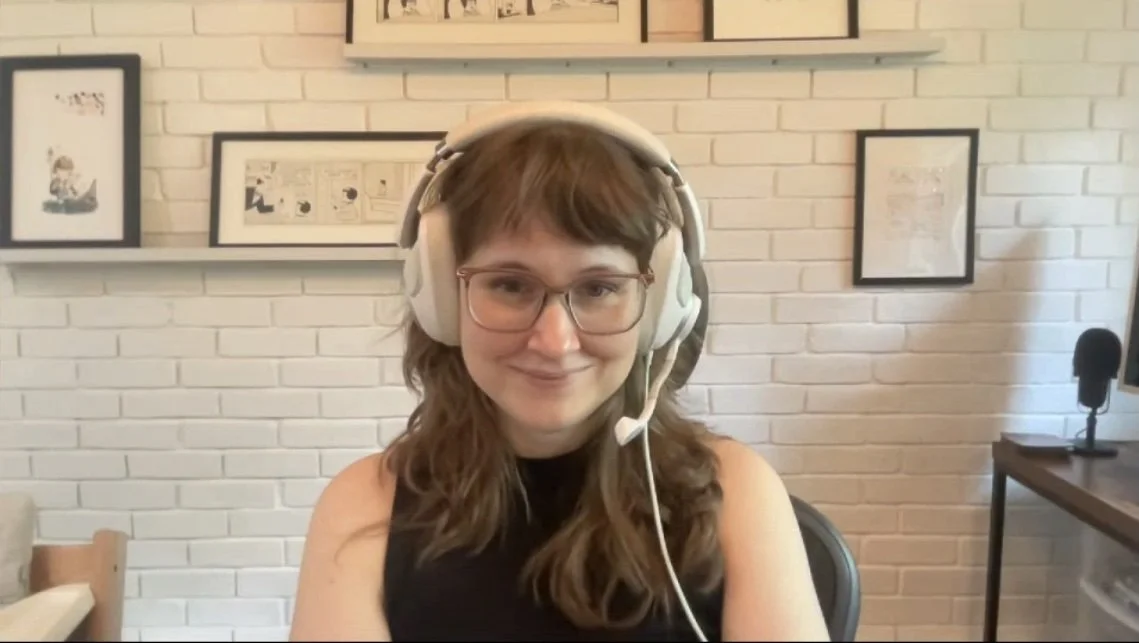
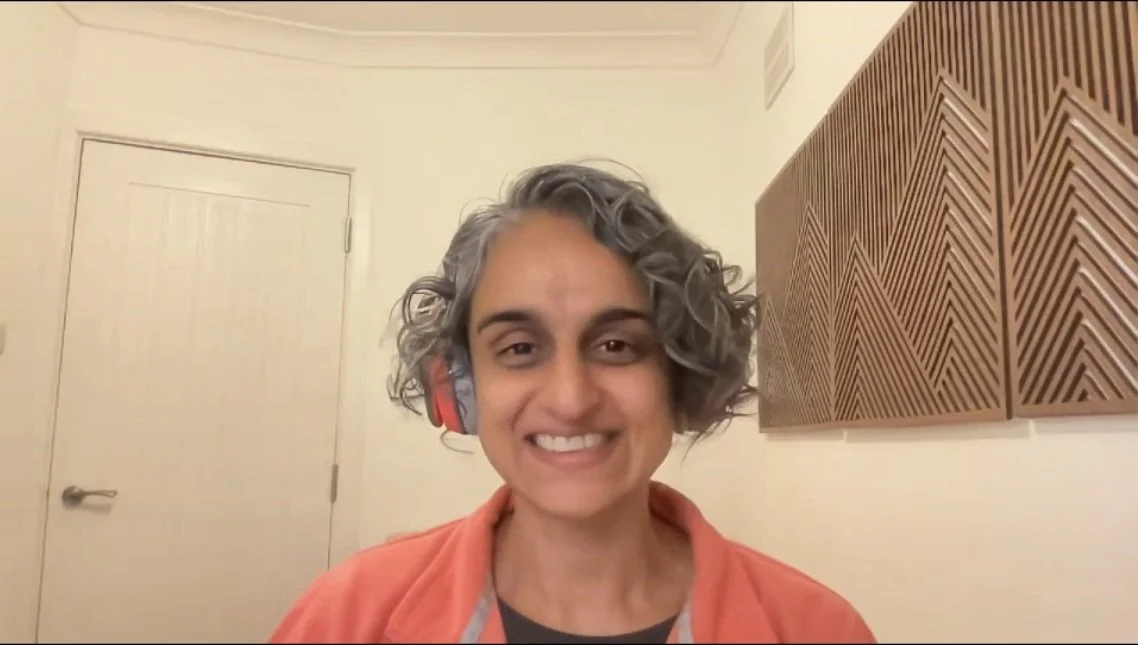
Dr. Olivia Walch is the CEO of Arcascope and an investigator at the University of Michigan, where she studies the mathematics of sleep and circadian rhythms through simulations and wearable devices.
She also has a penchant for boots in the winter.
Find out more about Olivia’s work at Arcascope: https://arcascope.com/
Buy her book Sleep Groove on bookshop.org
The episode also features a throwback to the Geometry of Gerrymandering, with Dr. Thomas Weighill: https://2scientists.org/podcast/gerrymander. Olivia, was none other than the cartoonist and illustrator for the book on the subject, just going to show what a small scientific world we live in.


Listen:
Watch:
Subscribe to our YouTube channel now for all future recordings.
Episode transcript
[Intro music]
[00:00:11] Olivia: I am Olivia Walch. I'm the CEO and founder of Arcascope and an investigator at the University of Michigan in the Department of Neurology, and I study the mathematics of sleep and circadian rhythms.
[00:00:23] Parmvir: Woohoo. And I am Parmvir Bahia. I'm a neuroscientist, who didn't study the brain at all. Ironically.
And I'm a science communicator and your host for Biology and Numbers, a podcast by the Society for Mathematical Biology. And given that we're recording this in October, for those of us experiencing increasingly shorter evenings, and in my case, a want to sleep more, today's episode theme is particularly apt.
So how about you, Olivia? Do you also go into semi-hibernation mode at this time of year?
[00:00:54] Olivia: I definitely find I'll sleep a little more. I also eat a little more and always wanna buy boots. I'm like, it's time to buy boots. I don't think those last two are necessarily circadian related, but definitely the changing light really affects how I feel when I wake up in the morning.
It's dark and you don't have that light coming in through your eyelids to say, Hey: Day has begun.
[00:01:18] Parmvir: Yes. I actually can't imagine what it's like for the people who live so far north that they have permanent, kind of, summers and winters.
[00:01:27] Olivia: I've heard they really lean in hard to the cozy.
So candles and blankets and that could be something I get behind, but then in the summer, blackout curtains, like blackout curtains are life.
[00:01:41] Parmvir: Yeah.
[00:01:41] Olivia: 'Cause light is good, but more light is not always good.
[00:01:46] Parmvir: More good.
[00:01:47] Olivia: Yeah. More good. Gooder.
[00:01:51] Parmvir: Alrighty. So at this point in the conversation, I used to ask people whether they were team math or team bio, but since so many people reacted as if I was asking them to choose between their offspring, I'd like to tweak this to: What flavor of math biologist are you?
[00:02:07] Olivia: I am somebody who has gone full on translation. So that means I'm taking my math and my bio one in each hand 'cause they're both my precious, precious little offspring. And I'm trying to get people in the real world to benefit directly from them. So this means that, in terms of sitting down with a chalkboard and my fancy math department approved like chalk that's, like, really thick and it's got this like clear wrapper on it. I don't do that much anymore.
Instead, what I'm doing is making apps and putting them out there in the real world and responding to emails, being like, Hey, sorry, the app told you to stay awake for 36 hours straight. Let me go back to the chalkboard and figure some stuff out.
So it's probably, amongst people you talk to, who are really heavy on real world stuff while still trying to stay true to the theory of math and the theory of biology underpinning everything.
[00:03:03] Parmvir: Very cool.
So this is a podcast for SMB.
Are you a member? And if so, can you tell us what it means for you as a researcher in the field?
[00:03:13] Olivia: I am a member and SMB was one of the first conferences I went to as a math bio graduate student, and it's really invigorating to go to their conferences and just see all of the cool things people are doing and all the ways biology and mathematics can really mesh.
And I think, partially what, radicalize is too strong a word, but I like left grad school being like, we need to let the world know, about math bio. And the reason I do so much real world stuff is just 'cause I would get so many really amazing insights from going to SMB events and then be like, okay, but how many of these are breaking through, right?
Like it's, sort of more established for there to be a path of, oh, we've discovered a drug or we've discovered a, like signal processing technique that we can now implement in practice, with a company or like licensing university technology. And I think so many cool things in math bio, kind of, live in the community. And so in part, being exposed to all these things through SMB has made me really passionate about: okay, how can we break through this particular community of knowing about and sharing our own cool stuff with other people and seeing their cool stuff, to random person in Nevada changing their life because of somebody making a mathematical prediction related to biology.
[00:04:49] Parmvir: And I guess that's why you were so quick to confirm your participation for this podcast.
[00:04:54] Olivia: I was like, yeah, let's get the word out. [Both laugh]
[00:04:58] Parmvir: Excellent. So this is a kind of take on a hero origin story. So can you tell us how you ended up in the field of math bio?
[00:05:07] Olivia: For sure. I had done, what I consider sort of, more pure math research as an undergraduate, just like thinking about matrices and being like, well, it's true about a matrix that has this property and this property and this property. But I was also interested in biology and medicine and was taking classes in the biology department as an undergrad.
And when I went to grad school, the program I entered, I specifically chose because they have one math advisor and one advisor outside of the math department to help you shape your thesis work. And so mine was in the medical school. And the reason I wanted that sort of like one of each, even though the math advisor usually does most of the advising was I heard somebody say something like, yeah, like the math research you're working on right now, that that could be useful in 600 years.
[00:06:05] Parmvir: Oh.
[00:06:05] Olivia: Yeah. And I was like, Ooh, okay. Like, the cool matrices, right? Like what are, what's true about these matrices? And that person could have been wrong, but I was like, mmmh, I want what I'm doing to be useful sooner than that.
I'd like to at least on my deathbed, be like, I see a sign that this is, this is helping one person. And, like this firmly doesn't mean that research that doesn't have an immediate application is not valuable at all. Like, there's so many things we have nowadays where it was just like, I don't know it's cool, but my ego needs it. [Parmvir laughs]
I need to know that somebody's using my stuff. And so with that self knowledge, I was like, let's do the joint program. Let's do math and medicine combined so that I can have a secure sense of self that I have done something.
[00:06:49] Parmvir: Very cool. As someone who worked in pain research and was in the field where the researchers were awarded the Nobel Prize a couple of years ago, I understand that need to, kind of, be doing something that feels valuable. [Olivia laughs]
So the next question is another adjustment on my previous format. So I used to ask our guests to explain their research in 60 seconds or less, but you know what academics are like, right? So none of them would, well, very few would stay within the time limit.
So my new challenge is to get people to describe their research in a single sentence. So future guests, you all have Gosia Weh to thank for that. She was in our previous episode, and she managed to set the bar this high by doing it in a sentence.
[00:07:32] Olivia: What I work on is building a GPS for your body's clock.
[00:07:38] Parmvir: Oh. I like it. It leaves a lot more questions to be asked than expected.
[00:07:44] Olivia: I wanted a short sentence. I was kind of trusting you would give me later sentences to clarify.
[00:07:48] Parmvir: Yes, absolutely. That's the plan. But that gives us a kind of very interesting segue into talking about your work. Honestly, I'm such a nerd about the kind of things that you work on that I don't know where to start.
So you've got sleep science. As a runner, I'm very into wearables and all the data that we can get from them. And as a pharmacologist, I love telling everybody I'm a neuroscientist, but my training is all in pharmacology. I love learning about drug development and how they're useful, how they are developed to be used on patients. So, I'm going to allow you to go beyond the one sentence and give us a summary of what you do.
[00:08:29] Olivia: I'm so happy that this overlaps with your interests as much as it does. Please interrupt if you're like, oh, here's, here's something in my own life that makes me wonder about thing you are not currently talking about.
The GPS for your body's clock tagline comes from the fact that everybody has an internal clock, a circadian clock that captures their body's sense of time. Like: Hey, should I be producing melatonin right now? That's the night hormone for humans. And so if it's the middle of the day, probably not, but if I just worked a night shift if I just got back from traveling, if I'm just a person who's really disrupted and I'm sleeping kind of around the clock, well, your body could trigger melatonin production at any time of the day. And so for a long time there's this question of like, well, okay, how do we know what somebody's biological clock is doing right now?
If we don't do a really annoying, invasive test. If we don't basically either take a bunch of blood or have them spit into tubes every half hour for like eight hours. Like, this is how we figure out where you are. But actually wearables coupled to math does quite well at tracking.
So this is the tracking part of GPS where I open my phone and it says, you are at your house. Here's a little dot where you're, you're at right now, and here's the headphones you lost two weeks ago. Pretty close by like. Like we can track where you are biologically in time from the devices that you're wearing. And even if you're not wearing it, most people have an unhealthy enough relationship with their phone that we can do pretty good just from phone activity too.
And then the other thing a GPS does is it tells you instructions on how to get from where you are to to somewhere else. And so the second place the math comes in is in generating prescriptions. And so a prescription could be like, Hey, you wanna get over jet lag? Here is when you should get light. Here's when you should eat, here's when you should sleep in order to shift yourself to this new time zone. So basically move in space for GPS, move in biological time for what we work on.
But then there's this other sort of, version of prescription that we're moving into, which is like, Hey, are you taking a drug right now? What it's gonna do to your body might be time dependent. It might matter if your body's producing melatonin when you take it or not. And so, the next generation of, hey, here's what you should do, steering your circadian clock includes, Hey, this is when you should take this drug, so it's as effective as possible and as minimally toxic as we can get it.
[00:11:14] Parmvir: Very neat. So can you just go a little bit more into what the circadian rhythm is and why it's so important? You've kind of covered that briefly already.
[00:11:23] Olivia: Circadian rhythms are a thing in biology that I think have bad user interface.
I say this all the time, like, like we talk about apps having bad user interface or gadgets having bad user interface. If you're like, where's the on button? I think hotel rooms usually have bad user interface when you're trying to find the light and you're like, none of these things turn on the light.
Like I think of that as as bad UI. And normally I bring out my knives from math because I think the UI around logarithms is very confusing. I think the UI around inverse functions very confusing. We have like to the negative one, meaning multiple different things in different contexts. And then we get mad at seventh graders for not understanding it.
But circadian rhythms are biology's bad UI because people are like, oh, the circadian rhythm. And then you're like, well actually there's a lot, there's a lot of circadian rhythms. And then they're like, oh, okay. Can you tell me them? And then people are like, ah, there's so many, so everything is a circadian rhythm.
And, and so then people are kind of left with this sense of like, I guess circadian rhythms are the same thing as sleep and they're not. And so I basically think of circadian rhythms as an undercurrent, where the various rhythms throughout your body might promote sleep at certain times, but it like also promotes eating at certain times and you don't necessarily eat at those times.
Like you kind of eat when you're hungry and you sleep when there's this sort of confluence of the circadian clock promoting sleep and you being really hungry for sleep. Like if you've stayed up for 36 hours, you can pretty much fall asleep whenever, regardless of what your circadian clock is doing.
So I've talked about why it's bad. Let me actually just try and give you a definition of what circadian rhythms are. Anything in your body that goes up and down about once a day. That's stretchy and flexible and depends on the signals you give it and the signals that matter most to it are your light exposure and, and sort of when you're active versus when you're inactive.
And so, I think of circadian health as, as kind of like how rhythmic your body is, how in a groove your body is, and signs of being in a groove outside of circadian rhythms. Like, I don't know if you've ever like, walked on a sidewalk and done two steps for every sidewalk square. 'cause it's really fun. You're like, dun duh duh. And you're just like, I'm just gonna adjust my gait so I get two per per.
[00:13:55] Parmvir: Mm-hmm.
[00:13:56] Olivia: And it's like, you're just not even really thinking about it. You're like, yeah, I'm hitting it. You're kind of in a groove. And then if you imagine like the sidewalk square is getting further and further apart, or like it is too short that you can't comfortably do two steps in one.
You sort of lose the groove or you just give up. You're like, I don't, I don't know, like I'm just gonna walk normally and not have fun doing two steps per sidewalk square. So that's how your circadian clock works, right? Where instead of it being sidewalk tiles, it's your day. It's like the light exposure over your day. And if you get really consistent light-dark exposure with a period of 24 hours and enough light and enough dark, your body can track that. And it's like, I'm in a groove. I'm doing great.
But if you make the days longer, like you go to a planet that has a 28 hour day. It's kind of like the long sidewalk tiles where you can't do two steps for it. And you're eventually just like, I give up whatever. I'm just gonna walk. And you start to free run, which is basically like the light outside and what's going on in your brain are disconnected. And then like, if you imagine, like, working night shifts, that's kind of like you're trying to find the sidewalk tiles, but you've got a long one and a short one and a long one, and you're just, you're not in a groove.
And so, that's sort of the physics of how your clock is working to incorporate these signals. And then just the last thing I'll say is that when you have healthy circadian rhythms, in general, what you can kind of expect is like a clear day/night difference between different things going on in your body. So your body's like, yes, give me food to metabolize at these hours and don't give me food to metabolize at these hours. Yes, I'm making melatonin right now. No, I'm not making any melatonin right now. But modern life has kind of made it so that instead of having these really clear high amplitude rhythms, we kind of get like crappy: uh, yeah, you can eat now if you want. It's not the worst thing to eat now, it's like a little bit worse. and so all of these rhythms throughout your body, like just end up like losing amplitude, losing what actually makes them a rhythm. And, people feel, feel worse as a result. So, the few word version of everything I just said, circadian rhythms are your body's groove.
[00:16:20] Parmvir: I like it. I like it. so now I'm starting to worry about the experiments that I did with my mice. So generally I would do them at the same time of day. And I'm wondering how many of my experiments were funky when I had that one day and I had to do the experiments slightly later. So, you know, of course the mice have like their routines with the people who come in and look after them.
So I'm curious. Should I have been doing these things at different times to see how the mice responded? So, I mean, I would assume that something like pain, for example, could be profoundly affected by, you know, when I pluck them out and when I start to do the experiment with them.
[00:17:01] Olivia: Actually, I think pain is one of the things people point to most when they're, like, there is a known time of day effect, in people. I'm paranoid about flipping the sign here. So with that caveat of, look this up, don't trust Olivia's words in this podcast. I'm pretty sure like people say we overtreat pain in the morning and undertreat it later in the day 'cause you people are sort of more robust.
But what you, you hit on that I am, I'm like really passionate about is, is that, not only do you get different answers in different things at different times of the day, but also often, at least when I did mouse work, I was usually plucking them out of their, their cage when the lights were on.
[00:17:41] Parmvir: Mm-hmm.
[00:17:41] Olivia: So they were, they were sleeping. They were, like, all on top of each other. And you know, there's a billion and a half reasons why something could work in mice and not in humans. Like, they're a different species, important caveat, but I, I think, a reason for why sometimes things might work in mice but not work in humans is if, for instance, the treatment you were giving them is something that's supposed to act on processes that are peaking during the inactive period, right?
Like, so you're kind of nailing it for the mice if the lights are on and you're pulling 'em up, they're like, well, okay, and then you're, you're giving them a drug or some kind of intervention when their body's mostly in sleep mode and it works. But then you won't, you're no, not waking anyone up at 2:00 AM in a phase one clinical trial to be like, Hey, take this drug.
And so a factor that could lead to promising treatments just getting missed is the leap from nocturnal to diurnal and thinking about timing and drug delivery.
[00:18:41] Parmvir: Yeah, I mean, it seems so obvious when you talk about it, but it's just, it's amazing that it's never occurred to me before.
[00:18:47] Olivia: Well, like we also live in the real world where there's finite budget and finite time.
So like, of course it would be amazing to do like every hour of the day and have infinite resources to make that possible but we don't, and so it's totally reasonable that like, timing is not the one that gets the attention.
[00:19:07] Parmvir: I would not have wanted to do it every hour of the day.
[00:19:09] Olivia: Yeah. Well that's another factor too, where it's like you, you need people to come in and actually like, take blood draws or, or do things and so you, you also end up sampling a very limited hour of the day for very reasonable reasons, like nobody is bad here, but it is an opportunity if we can say, Hey, we did some math and we figured out that for this particular thing, okay, actually it is better to do it at this time. So let's change the light schedule that the mice are under, for instance, and, and make it so people can still come in at normal human hours, but be hitting them at a different biological time.
And, and actually often with modeling, we talk about the potential to, you know, make things cheaper. You, you don't have to do as many experiments if you like, are really targeted with math predictions to say: this should be the best time or this should work. And so I think there is also this potential given that we don't live in the world where you can do every hour of the day and run infinite mini mice, at all circadian times.
Use first principles, math modeling of biological processes to say, listen for what you're trying to do here's how to optimize from a timing perspective.
[00:20:24] Parmvir: That leads rather beautifully into my next question, which is where does the math come into what you do and what are the kind of models that you use?
[00:20:32] Olivia: The way I talk about this and I love it, and I think it has like a 50% hit rate, but I'm gonna do it anyway. It's like it's my beloved child. We use systems of differential equations to do this tracking part, to say like, Hey, where are you right now? Which is the same math as a video game.
And so, in a video game, like if I'm playing my game, and I, like, really mash a button. Let's say that means I really throw the ball really hard, and if I just lightly mash the button, it doesn't go as far. But there's a system of equations we've written out that basically says, all right, if you throw the ball with this force, here's how far it's gonna go because of the forces of gravity and air resistance and all these things, in my really boring video game I've just described, where all you're doing is throwing a ball. [Parmvir laughs]
But like we do the same thing where instead of it being: hey, this engine, this physics engine has gravity in it and air resistance. We do a biophysics engine for your brain and we just say, like: Hey, this is how the clock in your brain, the super chiasmatic nucleus, would respond to a stimulus at this particular point in its cycle.
So it would be like, whoa, okay, speed up the clock a lot or whoa, slow it down a lot. And instead of button mashes being the inputs, we use wearable data. So we say: Hey, this wearable data is capturing what you're doing. So it's kind of like the inputs to your biological system.
So if you go for a really hard run, that's kind of the equivalent of the really strong button push. And then the engine is basically saying, okay, how would the body respond to these? So would it make you stay up later tomorrow? Would it have you wake up earlier tomorrow?
And then we just, we basically add up every little tiny chunk of wearable data that we have from you and pass it into the system. And what we get on the outside, is a really remarkably good reflection of what is going on in your brain, which we've, we've, I'm not just saying that we've like, actually collected a lot of spit from people and been like, we called it, we knew when the spit was gonna do its thing when melatonin was gonna start rising in the spit. And it did. And so, differential equations, basically a video game reflection of your body and you mashing buttons, is replaced with you doing stuff and a wearable picking it up.
[00:22:57] Parmvir: So I don't know whether to be really kind of depressed by that or really excited by the fact that if my watch is accurately telling me about my sleep, because that's one of the things I do when I wake up, is I go through all the little stats it gives me. 'Cause the number of times it tells me you've had a really crap sleep. [Olivia laughs] I'm like, is that true? Or, you know, was it just registering it wrong? Or when I have a good sleep, like I'll wake up and I'll still feel kind of terrible and I dunno whether to believe it or not.
[00:23:25] Olivia: Yeah. Two answers there. One is, like having done these, like apps and, and like really been like, oh, I'm gonna get stuff in the real world.
The reason why those sleep companies are like, Hey, here's your sleep last night, bad crap. Or just, they give you this number, right? And you're like, what's the number mean? It's because enduringly, we found that that's what our users want. We're like, what if we do this? What if we do this? And they're like, you know, what I'd really go for is a big number.
And, and then like with specifically sleep tracking, sleep tracking is simultaneously an easy problem and that you can do actually pretty good if you just say, Hey, are you moving? You're awake. Are you not moving? You're asleep. Like that, that's really powerful. That does, like quite a good job. So it's not hard to do sleep classification from wearables except that moving significantly beyond that baseline level, which of course is, which isn't great.
Like, it's surprisingly good, but it, like, there's plenty of times where you're just lying, still thinking about your life totally awake and, the wearable's gonna be like: great job, or they're gonna be afraid about missing something like that, and they're gonna choose a threshold that says, look, it was ambiguous, let's err on the side of it was a bad night of sleep.
So like, it's easy because you can do decent really fast. It's quite hard because doing better than that is consistently a challenge. And you've got wearable companies, like Garmin, for instance. And you know, I like Garmin as a brand. but there was a, okay, so there was a validation study where it looked at how accurate Garmin's sleep/wake was, and they might have changed it since then, but it was getting like 98% of the sleep right, but like only 20% of the wake right, which is, which is actually pretty poor. Like the, are you moving or not usually gets about 40% of the wake right, and slightly less of the sleep, right.
All of which is to say, like, I think when you see a night that looks bad and you're like, was it actually that bad? Part of it could just be that your wrist isn't the same thing as your brain and all these wearable companies are picking where they want the threshold to be. Are we gonna tell people: Ooh, like you had a bad night and have them be like: ah, no, I think it was pretty good. Or are we gonna risk telling them it was great and then, them being like: oh, it wasn't great at all, rage quit, throw my watch across the room.
The only other thing I'll say is like, how good you feel when you wake up in the morning. That's something that, like in society, me growing up I was like, it's how much sleep I got last night. Like that is the thing that matters. And I've basically done a 180 where I'm like, actually, you know, there's sort of like how hungry you are for sleep and how much you feed that hunger, which is gonna be addressed by how long you sleep. But then there's how in sync with your circadian rhythm was your sleep as this kind of separate parallel track, I think so much about how you feel in the morning is that circadian piece, and if you've ever, I think you were just saying like you sleep seemingly great and you wake up and you feel, like, horrible. One of the reasons why could be when you sleep unusually long, you're often waking up at a different circadian time than you normally would, and so you're like. I slept 10 hours. I still feel miserable. What's going on? The hunger for sleep is down, but you're, you're not waking up when your body's like: Hey, it's morning, you're waking up at the wrong time, basically. And so you'd get none of the joys of, of having sated your hunger for sleep and all the miseries of, of circadian misalignment.
[00:27:07] Parmvir: So going back to the fact that this work that you're doing is actually, is it actually starting to inform clinical trials or is that the plan?
[00:27:16] Olivia: So we've, we've done. Sort of clinical trials in the past aimed at behavioral interventions. So like, Hey, you're a person who's fatigued, we're gonna try and make you less fatigued with the power of math.
And I think one thing people think about with circadian rhythms is like, oh, okay, you need morning light. Morning light is the answer for circadian rhythms, except like, it really depends on you and what your goals are. So like a classic example of somebody I would not tell to get morning light is, Hey, I'm 68 years old, I wake up at 4:30 every morning. And then I just feel kind of crappy during the day. And then, I fall asleep sometime in the early evening, like assuming they're not trying to wake up even earlier than that. I'd be like, alright, when you wake up. You don't need to blast yourself with light first thing in the morning. What that's functionally gonna do is going to make you even more of an early type. It's gonna push your wake up even earlier. So what that person I would recommend do is: hey, you need to get really clear day signals during the day. So bright light in the middle of the day, probably for them between 11:00 AM and 1:00 PM and then super, super dark at night. But for other people, like somebody who has a chronically hard time waking up in the morning, that person I might say like: Hey, the most critical time for light for you is first thing in the morning after you wake up. So we did this 140 patient clinical trial with people who had cancer-related fatigue, and we basically said, here's all our recommendations that you specifically should follow based on what you're telling us.
So you're saying you're waking up at 4:30 and you wanna wake up at eight? We're not gonna tell you to get morning light. And so, the app would sort of make a personalized prescription for them that would update based on whether or not they did what we told them to do. And it was very cool to see that by personalizing we were able to meaningfully cut fatigue in this population. There was a control group that just got generic recommendations and we did much better than them at improving quality of life for these patients.
So that's a sort of behavioral clinical trial, but where I'm most excited to go and where we're heading next is. Okay, like, let's bring timing to drug discovery. Let's think about circadian rhythms in all stages of clinical trials to make it more likely that drugs succeed. And so what we did there as we said, Hey, pharma, you should use our tech in clinical trials, to control for everyone being different. And it could be a key biomarker for understanding why something worked for this person and not this other person. Oh, and we can also suggest: hey, for this drug, this is when it should be taken.
And the response we got was sort of like, how much can it possibly matter? So we changed our approach and we hypothesized that if timing actually matters as much as we think it does, there should be drugs out there that could have worked but failed because they were timed wrong.
So we went looking, and we found a bunch, and then we took two of these drugs to, mouse experiments and we said like: Hey, like here's the time we think should work best. Here's the time they gave it in the original studies in humans. Let's see if there's a difference. And in both of them there was a huge difference.
So in one, it just was indistinguishable from water if you gave it at the bad time. Whereas at the good time, it meaningfully shrunk tumor size.
[00:30:51] Parmvir: Wow.
[00:30:52] Olivia: And in another one, it was like 75% more tumor growth at the bad time. And two thirds of the mice died at the end of, of the trial, whereas at our time, only one mouse died.
And it was also the least toxic in terms of side effects. So not only was it most effective, but it was also least toxic at that time and to put an end cap on this, these were drugs that we didn't know anything about until we sort of found them from first principles, mathematical modeling.
These are drugs that had hundreds of millions of dollars invested in them, probably just to, to fail where they did in clinical development and were near misses. And just by changing the time, we were able to make them dramatically more effective. So we think there's a lot of drugs out there that are like this and we think that there's real potential in leveraging math bio to find opportunities like this, and show that math bio can be really meaningful in the real world.
[00:31:58] Parmvir: Absolutely. I do wonder though, how easy that would be to implement, given that obviously hospitals are trying to see as many patients as they can within a period of time. So they get the chemo, like some people will get it at eight in the morning, some people will get it 6:00 PM
[00:32:13] Olivia: For sure. Yeah. And this is also where math collides with reality. So like when you were like, that's not gonna happen. So much of the math we do is like figuring out like, okay, this is the best path for somebody to follow. They're not gonna do that. What version of it can we give them that they actually will do?
Kind of like, this is a bit of a stretch, but like GPS, maybe there's like a really scary highway and it's the best way to go, but we just know that most people don't want to go on Death Highway in this hypothetical example. And so we're just like, okay, that's the fastest way, but it's not the way that people are gonna do it in the real world, here are other routes that we can take you.
And specifically for the hospital use case, like scheduling is incredibly hard. So we were steering clear of drugs that are infusions. We're just doing orals because there at least, people can control the timing and it's something that I had to be like awakened to the reality of, because I was like, but if it works better, surely people will care about timing. I think they will eventually, but we need to really reckon with the fact that...
[00:33:12] Parmvir: Life.
[00:33:13] Olivia: People, yeah, life. Life things have to actually be doable to be done.
[00:33:19] Parmvir: Yeah. So changing tack a little bit from what you do to how you do it, what was it like to found a startup to do the work? Like what have you found challenging and what have you found really gratifying about it?
[00:33:33] Olivia: Really gratifying is just being able to put stuff out in the world and get emails from people who you don't know, being like: Hey, I'm a firefighter in Canada. This app saved my life. It was critical to me being able to stay up all night fighting fires, like that is so cool. I look at it whenever I'm like, it's really annoying to do state by state, payroll tax registrations, but emails from people like this are really heartening.
Like my journey was, I went from knowing basically nothing to knowing slightly more. But my company was founded because I got an NIH small business grant that I applied for 30 minutes after the deadline while sitting on the floor of Michigan's math department, really sweaty because I was like, ah, I've missed the deadline. And like I had needed one form to include.
I really did not understand phrases like business model B2B, B2C, which means business to business or business to consumer. And I also was very comically disdainful of something like the concept of product market fit. I was like, well, that doesn't mean anything. What is product market fit? That's stupid.
And actually what it means is that your product has escape velocity. Like as soon as I was appropriately humbled by the real world. And I was like, oh, okay, so this is what they're saying. Product market fit means that you are growing at a rate that is going to make a sustainable business versus like, you do so many simulations in biology where you're like up the thing is going up and then it goes down again. And of course it has value 'cause maybe you're wondering like: hey, are we gonna be able to successfully restart somebody's heart? And no, we, we weren't able to do that. But the business phrase for this is you need to find something that's gonna be able to like, go up and stay up and like reach a new steady state, like reach a sustainable business level.
And so by being really bad at a lot of business-related things, I gradually got better at it. And now every morning I'm like, can't wait to get out there and find product market fit. I love to find product market fit with my customers.
[00:35:39] Parmvir: That's a totally normal thing to be thinking about first thing in the morning.
So while looking you up, and I think it's related to this, your name also bizarrely appears as giving testimony on a House Ways and Means Committee, Subcommittee on Trade. What was that all about?
[00:35:55] Olivia: So I live right outside of Washington, DC and I do Zumba with a woman who works for a, basically like a lobbying group for global trade.
And, and she works a lot with startups and she's like: Hey, we're looking for somebody to testify on how a startup views global trade policies. And as a startup, like I want, I'm not against regulation at all, but I want regulation to be the same everywhere, so I can be like, great, I don't have to write custom code for this country or this country.
I don't wanna have to pay a tariff if somebody downloads my app in this country or like, downloads it somewhere and moves there. Like, I want things to be easy because as a startup I have way fewer resources for handling regulation in many different places than Big Tech does.
And because of my Zumba connection, I got to go before Congress and it was great. I had a really good time. I think they asked very substantial questions of the other people and really, softballs of me, but no complaints about that. I was happy to just be a small business representative and say that I think international digital trade is good.
[00:37:09] Parmvir: Yeah, talking about politics seems kind of timely right now, and I realize one of the other things I was looking at up about you is you, you worked on something called political geometry, so I don't know if you know someone called Thomas Weighill?
[00:37:23] Olivia: Oh yes. Yeah. Do you know Thomas?
[00:37:25] Parmvir: I do, because I actually have another podcast called 2Scientists. I'm going to shamelessly self-promote here, and we spoke with him a few years ago about the Geometry of Gerrymandering, which is an absolutely fascinating subject. And I really, really enjoyed talking to him. So, I'm gonna put a link to his podcast in the episode in the show notes as well. But yeah, how did that come about?
[00:37:49] Olivia: It was 2017. I was like, I need to do something and so I was like, mathematics can extend the language we use around gerrymandering. It can sort of help us define what a gerrymander is, and it was another thing which was very humbling, 'cause everything I went into thinking would help solve the problem was wrong.
You're like, oh, okay. We just need to figure out if a shape is weird and there's lots of good reasons why shapes being weird doesn't mean it's a gerrymander. So then I was like, okay, well the thing that makes it a gerrymander is if there's a real difference between the vote share and the seat share. So how people vote versus how they are represented in some body.
But there's also totally fair reasons why you could get a big difference between vote share and seat share, that have nothing to do with malicious intent, it's just how people are distributed in a place. And so I learned a lot, but then I also wanted to get the word out and so I'm also a cartoonist and so I plugged in with the group at Tufts, the Metric Geometry and Gerrymandering Group that Thomas was affiliated with. They were great and I basically helped illustrate and edit a textbook on gerrymandering, one chapter of which, although he did lots of other things for it too, was Thomas's.
[00:39:06] Parmvir: That's so cool.
[00:39:08] Olivia: It was really fun and, I mean it's, it's relevant now as gerrymandering is back in the news. And, I think, a lot of the things I learned then are sort of being learned again about like, okay, well how do you tell basically everything you think would be good going in ends up having issues.
So, having an illustrated textbook will help hopefully advance the conversation slightly faster than it would in the absence of cute little cartoons in a textbook.
[00:39:35] Parmvir: On the subject of books, do you want to give a shameless plug to yours?
[00:39:39] Olivia: I would love to. So I have a book called Sleep Groove and it is 30,000 analogies for how to think about circadian rhythms to build up more of an intuition for how they work, given that they're not really tangible or tractable in at least how I sort of came up learning about them. You got one of them, which is walking on a sidewalk, and that's one of my analogies.
But if you're like, I would like 29,000 more, there are a bunch and it's Sleep Groove, available, where books are sold online. And I actually saw it in Barnes and Noble the other day, so I took a picture. There's only one copy presumably 'cause all the others had sold out.
[00:40:18] Parmvir: Obviously.
[00:40:19] Olivia: Yeah. [Laughs]
[00:40:22] Parmvir: Actually my favorite place to go for books at the moment is bookshop.org.
[00:40:25] Olivia: Mm. Go to bookshop.org
[00:40:27] Parmvir: Exactly.
[00:40:28] Olivia: For Sleep Groove.
[00:40:29] Parmvir: Indeed.
So, I think we need to start wrapping this up because I'm gonna be here all night, otherwise, but before I do that, I'm going to ask you a couple of very silly quickfire questions so people can learn about, Olivia the human rather than Olivia, the CEO, or whatever else it is that you do.
So my first one is, where do you find inspiration?
[00:40:54] Olivia: I like to look at random magazines that come to my house, and the less I have interest in the content, the better. So, I just like to flip through the pages and be like, oh, upholstered furniture for outdoors. Interesting. [Parmvir laughs]. Or like, the person who lived in my house had a totally different career from me. And so I get like obstetrics magazines all the time and something just totally outside my wheelhouse is very inspiring to me.
[00:41:23] Parmvir: Interesting. So again, we're in October. Are you a Halloween person? If so, what's the best thing about it?
[00:41:31] Olivia: As Halloween as you can be.
And the best thing is having free reign to scare your friends. So we usually do an escape room in our house where at least one of the people I know has to, yeah, like to wear a costume and stay in the basement for like, the entire party, to scare everyone else. So highly recommend.
[00:41:55] Parmvir: Uh, can I come?
[00:41:57] Olivia: Yeah, of course.
I highly recommend you coming to my party and then also scaring your friends in general, just to clarify what I was recommending. But you are invited.
[00:42:05] Parmvir: I see, I see.
So finally, this horrible conundrum I'm going to offer you. Would you rather have slow internet or always forget your passwords?
[00:42:14] Olivia: Oh, definitely always forget my passwords.
Like I have a small baby, and he was really angry about not being able to watch YouTube recently. And I was like, on the one hand I shouldn't have given you this addiction. And I own this. On the other hand how he was responding is how I would respond as an adult if I had slow internet.
So to save everyone that experience faster and turn it all the way and I'll just. Look up my passwords, I guess.
[00:42:43] Parmvir: Yes, quite, for those of us who remember dial-up, yeah, it's just not an option anymore. But on that note, thank you so much for your time Olivia. As I said, I could have talked to you for so long.
I realized we did mention your company's name, didn't we? Right?
[00:43:00] Olivia: At the very beginning I'll say it again, it's Arcascope and we have an app called Arcashift. You can download it, it's free.
Parmvir, thank you so much for this great interview. It was such a fun conversation.
[00:43:10] Parmvir: Likewise, and yeah. Thank you again.
[Outro music]
[00:43:58] Olivia: Because on top of that, which I just said, I also had two cinnamon buns, so I'm full.